.svg)
Key Takeaways
- A CFO lost seven figures in payment leverage after a mechanic's lien enforcement deadline lapsed — the most common and preventable lien failure in construction.
- Only a few software platforms specifically track mechanic's lien rights, including state-specific deadlines and notice requirements — the market is smaller than most subcontractors expect.
- The best mechanic's lien rights management software for subcontractors combines automated deadline tracking, preliminary notice generation, and state-by-state compliance rules in a single system.
- Managing lien deadlines in spreadsheets introduces unacceptable risk at scale — a single missed deadline can eliminate leverage on a multi-million dollar project with no recourse.
Over the past year, I’ve had a lot of conversations with subcontractors about mechanic’s lien rights. One of them still sticks with me.
I was at a construction finance conference in the Midwest, sitting at a shared table, when the CFO across from me said he was in a bad mood. He didn’t mince words. “I’ve got a seven-figure problem.”
The issue wasn’t disputed work or poor performance. They had a massive project that simply wasn’t paying and they had no real leverage left. Not because they didn’t do the work, but because they couldn’t file a lien. The deadline had lapsed.
That story isn’t an outlier. Mechanic’s lien rights are one of the strongest protections subcontractors have to ensure they get paid—but they only work if you follow strict, state-specific rules. Miss a deadline, send the wrong notice, or overlook a required step, and your right to file a lien can disappear entirely. That’s why more subcontractors are turning to specialized software: not to file more liens, but to avoid losing leverage in the first place.
This article focuses specifically on software that tracks mechanic’s lien rights—not lien waiver tools, and not legal services. We’ll cover the signs you may need a tool, the top software options on the market, and how to choose the right one for your team.
Signs You May Need Mechanic’s Lien Rights Software
Most subcontractors don’t ignore lien rights on purpose. They track them the same way they track everything else: spreadsheets, calendar reminders, and a lot of institutional knowledge.
That approach works… until it doesn’t.
If any of the following sound familiar, it may be time to consider mechanic’s lien rights software:
- You track lien deadlines in spreadsheets or personal calendars
- You’re unsure which projects still have active lien rights
- You operate in multiple states with different notice requirements
- You only think about lien rights after a payment is already late
- Filing a lien feels stressful because you’re not confident every step was followed
- You’ve asked, “Are we still protected on this job?” and gotten three different answers
Lien rights software doesn’t make projects more adversarial. It simply makes deadlines clear, risks visible, and decisions more intentional, long before things escalate.

Best Mechanic’s Lien Rights Management Software for Subcontractors
The market for mechanic’s lien rights management software is smaller than many people expect. While plenty of tools handle lien waivers or compliance broadly, only a few platforms actually track lien rights themselves, including state-specific deadlines and notice requirements.
Yes, the pickings are lean (pun intended), but that also makes the comparison easier. Below are the leading software options that meet that bar.
1. Siteline
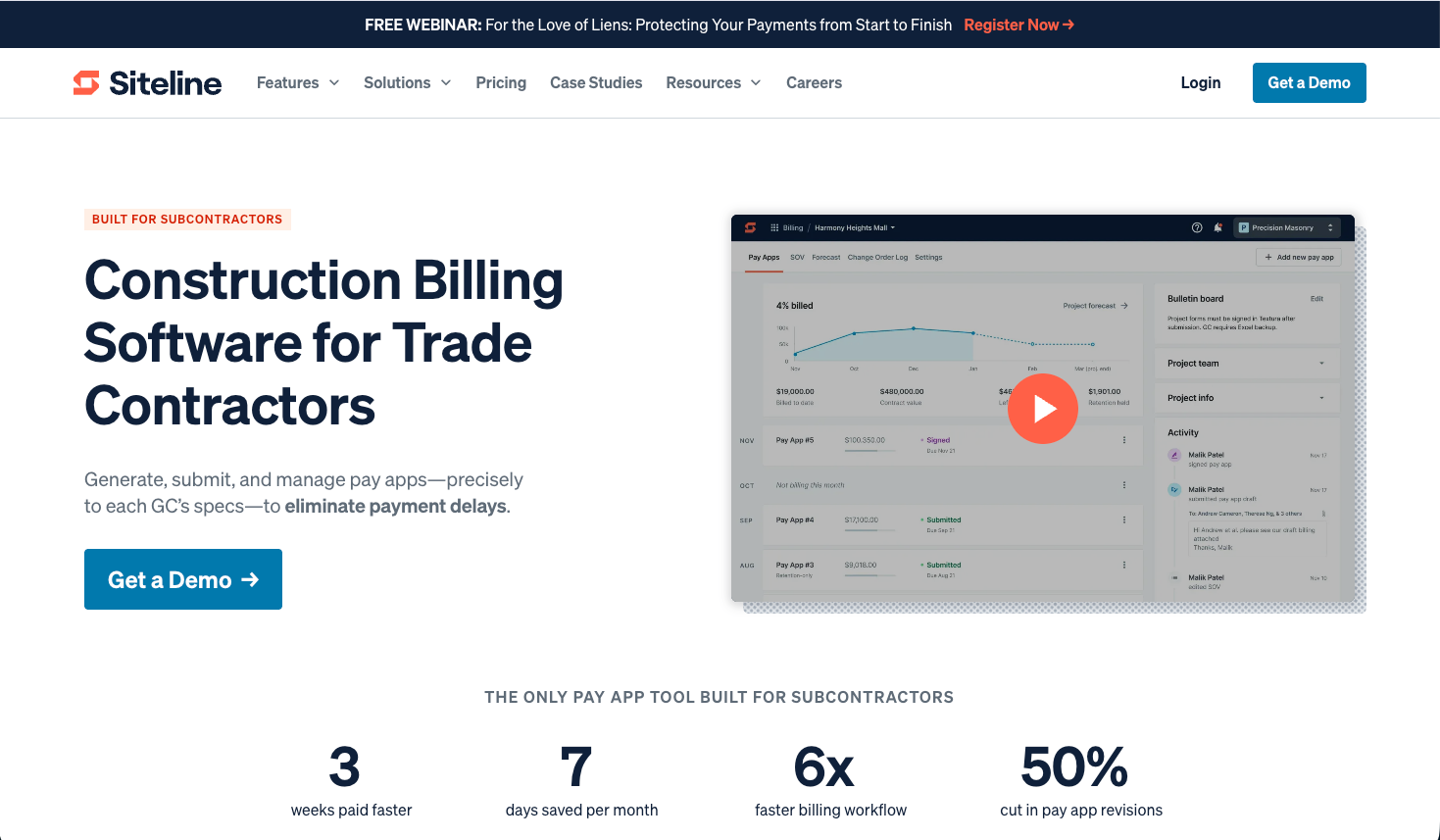
Siteline is construction billing software built specifically for commercial subcontractors. In addition to managing pay apps, collections, and compliance, Siteline includes lien rights tracking as part of its Compliance module.
Rather than treating lien rights as a standalone legal process, Siteline brings lien visibility directly into the workflows where payment issues already surface.
Key mechanic’s lien rights capabilities include:
- Tracking state-specific lien deadlines by project
- Flagging lien rights as protected, at risk, or missing information
- Project-level views that combine deadlines, billing activity, and collections
- Portfolio-level visibility so teams can see upcoming actions across all jobs
Because lien rights live alongside billing and A/R data, teams don’t have to context-switch or piece together information from multiple systems.
Why Siteline Leads the Pack
Most lien rights tools live in a silo. You have to remember to log in, check deadlines, and mentally connect the dots between billing, collections, and compliance yourself.
Siteline takes a simpler appraoch: if lien rights matter for getting paid, they should live where getting paid already happens.
By embedding lien rights tracking into billing and collections workflows, Siteline helps teams spot risk early, replace spreadsheets with visibility, and avoid the “oh no, are we still protected?” moment that often shows up too late.
Siteline wasn’t built to help subcontractors file more liens. It was built to help them avoid needing to file one at all by making lien deadlines hard to miss.
2. Levelset

Levelset is one of the most well-known mechanic’s lien rights platforms in the construction industry. Its software focuses on helping construction teams track lien deadlines, manage required notices, and navigate state-specific lien laws.
Strengths include:
- A robust state-by-state rules engine
- Tracking for preliminary notices, notices of intent, and lien eligibility
- Structured document workflows tied to lien requirements
Levelset is often a good fit for teams that want a dedicated lien rights platform, especially when legal escalation is already part of their process.
That said, the platform takes a legal- and document-first by approach by design. For many subcontractors, it sits adjacent to day-to-day billing and A/R workflows rather than inside them. This means lien rights visibility often lives outside the systems finance teams use most.
3. Handle

Handle is a notice management and lien tracking platform designed to help construction teams stay compliant with lien requirements and deadlines.
Notable features include:
- Tracking notice deadlines tied to mechanic’s lien rights
- Software-driven alerts for required actions
- Support for certified mail workflows
Handle offers a lighter-weight approach to lien rights tracking and can be a good option for teams focused primarily on getting notices out on time.
Like many standalone tools, however, lien tracking in Handle exists outside billing and collections systems. This can make it harder for finance teams to connect lien risk directly to payment status without jumping between tools.
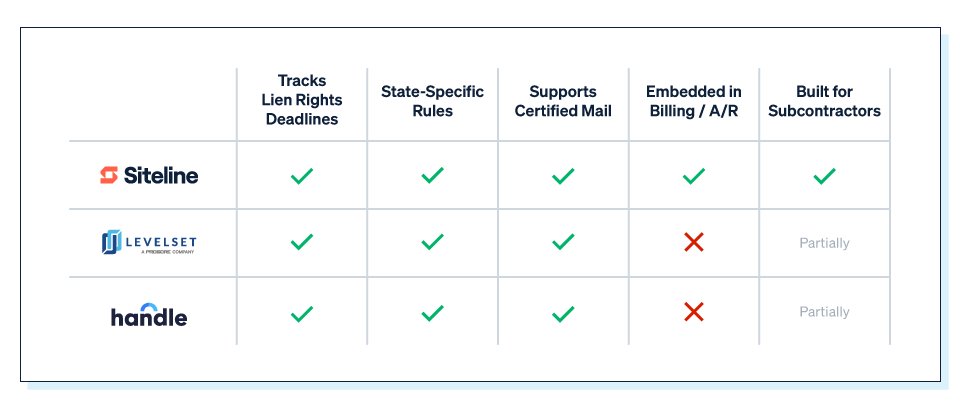
Quick Comparison of Mechanic’s Lien Rights Software
Not all lien tools are created equal—especially when it comes to where they live in your workflow.
How to Choose the Right Mechanic’s Lien Rights Software
When evaluating mechanic’s lien rights software, it helps to look beyond feature lists and focus on how the tool fits into your day-to-day workflow.
A few guiding questions to ask:
- Does the software track lien rights, or only lien waivers?
- Will deadlines and risks be visible before payments become a problem?
- Is lien tracking connected to billing and collections or isolated in a separate system?
- Who on your team will actually use the tool, and how often?
The best lien rights software doesn’t just help you react when something goes wrong. It gives you clarity early enough to avoid escalation altogether.
Final Thoughts
Mechanic’s lien rights aren’t about being aggressive. They’re about having leverage before you need it.
To that end, the right software doesn’t help you file more liens. It helps you protect your right to get paid without relying on memory, spreadsheets, or last-minute scrambles. Because by the time a project turns into a “seven-figure problem,” the window to act is often already closed.
If you want to see how lien rights tracking fits directly into billing and collections workflows, take a look at how Siteline helps you maintain leverage by making deadlines visible and protection automatic.
AIA®, G702®, and G703® are registered trademarks owned by The American Institute of Architects and ACD Operations, LLC. Siteline is not affiliated with The American Institute of Architects or ACD Operations, LLC. Users who wish to use Siteline’s software to assist in filling out AIA® forms must have or secure the AIA® forms. Siteline does not and will not provide users with the forms.


%202.webp)