.svg)


About This Episode
When Dan Wies started pushing Wies Drywall to adopt new technology, he wasn't walking into a blank slate. He was changing a family business where some employees had been around since his grandfather ran the company, and they weren't shy about reminding him how things used to be done.
Today, Dan is President of Wies Drywall and Construction, CEO of Wies Offsite, and Co-Founder of Constructobot. Across all three businesses, he's spent years experimenting with new technology, processes, and ways of working toward the same goal: making construction teams more effective without losing sight of the people doing the work.
In this episode of Billing & Chilling, Dan joins Claire Wilson to talk about what it actually takes to modernize an established construction business. They discuss when to listen to your team and when to push for change, how Dan vets and pilots new software, and how he measures the real ROI of technology beyond dollars and hours saved.
Ultimately, Dan isn't interested in technology for technology's sake. Every investment comes back to the same question: will this make the business—and more importantly, the people behind it—better?
What You'll Learn
- How to introduce change in a legacy construction business without trying to change everything at once
- What Dan looks for when vetting new construction software and why a vendor's staying power matters
- Why construction is slow to adopt new technology and how getting burned has fueled industry skepticism
- How Dan is putting AI to work today and where he sees limits for AI and robotics in construction
- Why the ROI of new technology should include its impact on your people, not just cost and time savings
Episode Timestamps
00:10: Meet Dan Wies
1:36: Taking Over the Family Business
3:20: One Mission Across Three Companies
4:59: Modernizing a Legacy Business
8:01: Finding the Right Approach to Change
10:33: How Dan Vets Construction Software
14:27: Why Construction is Full of Tech Skeptics
16:59: Putting AI to Work in Business
21:43: Will Robots Replace Construction Workers?
24:39: Measuring the ROI of New Software
26:06: Making Your Best People More Effective
28:10: Setting Your Team Up for Successful Change
29:29: Raising the Next Generation of a Family Business
33:20: One Thing Every Contractor Should Remember
Key Takeaways
- Modernization is as much about people as it is technology. From gradual pilots to pushing change head-on, the right approach depends on your team, the problem you're solving, and knowing when feedback is useful versus when resistance is simply resistance to change.
- Treat software selection like a long-term business decision. When you only get one shot every few years to implement new software company-wide, choose carefully. Look beyond features and demos to a vendor's development cadence, product backlog, and whether it has staying power to support your business for the long haul.
- Construction's tech skepticism has been earned. Trades, markets, and workflows vary widely, and many contractors have been burned by overpromising software. Vendors that understand those nuances, solve real problems, and don't oversell can earn lasting loyalty.
- Software ROI goes beyond eliminating hours or headcount. Alongside time and cost savings, consider whether technology creates capacity, reduces duplicated work, lowers stress, and improves employees' jobs. The bigger question is whether it makes your best people more effective.
- Change gets harder before it gets easier. Be upfront if an implementation will be painful and set expectations for the learning curve. When the long-term payoff is worthwhile, don't let short-term disruption derail the change.
Transcript
View full transcript
Claire (00:10)Hi, everyone, and welcome to Billing & Chilling, the show where we get real about construction billing and what it actually takes for subcontractors to get paid in this industry. Every episode I sit down with people who live and breathe business of subcontracting to figure out how subs can avoid risky moves and get paid what they're owed. Today we're getting into what it actually takes to modernize a subcontracting business without breaking it.
Claire (00:33)Because for most subs, the hard part of adopting new technology isn't the technology itself. It's introducing change inside a company that's been doing things a certain way for decades. So my guest is Dan Wies, who's taking the reins of Wies Drywall, a family business that's been building for 57 years. But Dan doesn't just run one company, he also leads Wies Offsite, a national prefab business, and Constructobot, a software company developing tools that automate 3D modeling.
Claire (01:01)Software his own teams use every single day. He's also heavily involved in AWCI, WCCA. What else am I missing?
Dan Wies (01:11)SWACCA as well. It's a national union. Yeah. I don't know about the man.Claire (01:13)Yeah, he's the man. He's involved everywhere. So
Claire (01:16)Dan, you've got a lot going on and I'm especially excited to have you here. So welcome to the show.
Dan Wies (01:20)Yeah, thanks for having me on. It was great to meet you many years ago and happy to be here with you today.
Claire (01:27)Yeah, we first met, gosh, I think it was five years ago in your home city. Is that right? Yeah, five years ago.
Dan Wies (01:33)Yeah, it could have been. Yeah. Mm-hmm.
Claire (01:36)Crazy. So Wies Drywall has been around for nearly six decades and your dad has shown up to the office almost every day of his life. Now you're stepping in to lead the business. What's that transition been like for you?
Dan Wies (01:50)Yeah, it's you know, it's pretty it's funny, it's natural. But as these things ebb and flow, you know, my grandfather started the company back in the early seventies or like 1971 to be exact. And you know, my dad has only ever been born and raised in the business too. And me as well. I've never worked anywhere outside of this company. I started sweeping the floors in the warehouse when I was twelve. I was supposed to start when I was eleven, but I broke my ankle that of summer.
Dan Wies (02:17)but you know, it's kind of all I've ever known.
Claire (02:22)Yeah.
Dan Wies (02:23)and so taking over the company, you know, you kinda always have this idea of what running business looks like, you know, and obviously I've started multiple companies, but taking over the generational family business does carry some extra weight.
Claire (02:38)Yeah.
Dan Wies (02:39)and fortunately, like, you know, we've had
Dan Wies (02:42)kind of a slow transition over the last decade to that. And so I've been able to make a lot of key hires and really transition the team over. So I mean, really the reality is most of the transition is just in my own brain.
Claire (02:55)Yeah. Yeah, totally. And you're not only dealing with that transition, but you're also juggling running three different companies. But when we spoke a couple of weeks ago, you said something that really stuck with me is that it's not easier to run these three companies, but you're all working towards the same thing You have one mission. So can you talk a little bit about that mission and operating under that one goal?
Dan Wies (03:20)Yeah, for sure. You know, gosh. For reference, I'm in my early 40s now. So when I was in my late 20s, so 15 years ago. It was like coming out of the economic recession, things were still very slow. Frankly, I was just really bored. There were things I could have
Claire (03:37)This is
Dan Wies (03:37)been doing at work, but I was locked in my office at the time for just days on end.
Dan Wies (03:42)And I had a lot of ideas. I had a lot of time to do a lot of different research, right? I toured a bunch of manufacturing facilities in St. Louis and just studied business, studied manufacturing. All with the one intent of how do I take this little commercial drywall subcontracting business here in St. Louis, Missouri, and really turn it into a very tech-forward
Dan Wies (04:09)You know, at the time my goal was to make it the most technologically advanced drywall business in the country. And that's kind of where all these things come from, right? It's like, how do we enable our folks in the field to be as effective as possible and have our company on the back end be lean? But also with just a lot of intention around tracking numbers, around understanding the business and the metrics and all those things. And I haven't
Dan Wies (04:36)accomplished my target yet, but that's the focus, right? Is how do we make that happen
Claire (04:42)Yeah. And I imagine like with a company that was started by your grandfather, you're kind of coming in as this younger generation, like making a lot of change. Can you talk through like how the business accepted that change and the things that you did there?
Dan Wies (04:59)Yeah, it's
Dan Wies (05:00)hard, right? I mean, because you're dealing with gosh, just two years ago, I had five or six people on our team that were pretty high up, right, in varying levels. People that my grandfather hired as teenagers, right?
Dan Wies (05:16)but yeah, those folks have told me multiple times, like, well, your grandfather wouldn't have done it this way or that, right? And it's just like, well, everything's changed in this business except for our ideologies right here. Otherwise, everything else has changed. And so we have to continually update our opinions, right? We have to continually.
Dan Wies (05:35)kind of push the envelope. Otherwise the old way of thinking, right, will get you an old-school company. And a lot of those companies don't make it, right? And what is my target? My target is to establish a generational company, right? And continue that. But it's hard, right, all that to say.
Dan Wies (05:52)Is because the processes, the systems, everything that everybody's used to, right? For decades and decades and decades, all that changes. So even when we think about even like digitizing a process,
Dan Wies (06:03)many years ago, were digitizing our ticketing process, right, in the field, an extra ticket. What were we trying to do? We were trying to replicate what our folks were used to seeing just in a digital environment, right?
Dan Wies (06:15)and that's kind
Claire (06:15)Yeah.
Dan Wies (06:15)of it's just it's chipping away at a lot of those things, right? Just to make it frankly as user friendly. And that varies by the user, but as user friendly as possible. But you know, sometimes I do have to take the more aggressive approach on things, right? When we when I wanted to really start taking a serious push at prefab.
Dan Wies (06:33)I had so much pushback internally, right? Like, well, you need to go get this kind of work to start this operation. I don't know why you're spending this money, right, on roll-forming equipment you know, like when we don't even have any of that kind you need this big job. It's just like, well, clients aren't gonna give us a big project, right? If we don't have it's
Claire (06:53)Yeah.
Dan Wies (06:54)like chicken and egg. And so like I couldn't even get some of these things bought in internally. So I literally had to go start another company.
Dan Wies (07:02)and then go start winning work with this other business, right? To get our drywall people to say, okay, like, yes, sure, we'll install it rather than having some of our competitors go do this work. So I mean,
Claire (07:16)Yeah.
Dan Wies (07:16)I've taken all the approaches. The subtle, the head-on, bull-nose, right? The the "we're gonna be nice about it"—I've done them all.
Claire (07:26)Yeah. I was gonna say, like, how do you approach, you know, getting buy-in from all these different people, but it sounds like you hit a bunch of different walls and then you kind of went off and just proved it on your own.
Dan Wies (07:37)Yeah, I wouldn't
Dan Wies (07:38)say on my own. You know, I've got an amazing team and you know I'm not great at a lot of things. But one of the things I am blessed at is being able to to bring a team together, right? And then bring a strong
Claire (07:50)Yeah.
Dan Wies (07:51)team together. To where sometimes they even push me out of the way, which is great.
Claire (07:57)Yeah, that's the best, isn't it?
Dan Wies (07:59)Sometimes, but yeah, it's good.
Claire (08:01)so what would you say from what you've seen, both from like your experience and maybe watching like other leaders in the space? You know, you're so deeply involved with so many associations. Like, what do you think the biggest mistake leaders make when they're trying to modernize their business?
Dan Wies (08:16)So sometimes people will
Dan Wies (08:22)Trying to say this gently: sometimes they'll listen to the team too much, Because anytime
Claire (08:26)Yeah.
Dan Wies (08:27)we're trying—as people, as humans, right? I've actually, this is all like a study on humans, right? And human buy-in. As humans, we don't want anything to change. Right? But the people that step outside the box are the ones who bring change, right?
Dan Wies (08:43)And so you gotta—it is that normal bell curve, right? You gotta get your early adopters on board. You gotta get people starting and just for us, it depends on the process, right? But like if I'm trying to adopt a new project management software, Number one, it's just not smart for my business to roll it out to the entire company with the push of a button, so what we'll do is we'll pilot it, right? Once I get honed in on the one,
Dan Wies (09:06)we're gonna keep learning and testing. We roll it out with some people who you know, say some foremen in the field and a project manager and a superintendent, right? They're gonna adopt that are gonna give me the real feedback. But some of the mistakes that people make are just number one, either listening to the team too much, I mean, frankly, it's a fine line, it's a gray area. You either listen to the team too much or you're too stuck in your own head.
Dan Wies (09:27)on your ideas, right? And you're too bullish on your own ideas.
Claire (09:29)Yeah.
Dan Wies (09:30)Those are both gonna make it fail. It's knowing and understanding your team, on where to push, right? But then also be humble enough to know that you're not always right.
Dan Wies (09:42)it's really more so not how do you implement it, it's actually a it's a it's how do how well do you know yourself and your team and how they're gonna be able to respond.
Claire (09:50)Yeah. And how can you sell things internally and understand what is going to motivate certain people to do certain things and communicate it in a way that gets them excited to, you know, buy in. From a pilot perspective, we have clients that will roll Siteline out in a certain division or with, you know, certain project managers. And it's always interesting to see, I feel like we have like both sides of the spectrum, like contractors that will
Claire (10:13)Say, I'm gonna give you my most complicated jobs and most complicated clients and my most old school project manager, or ones that are like, let's have these tech-forward people dive in and give us tons of feedback. What do you think is like a more appropriate approach? Like go the hardest route and see if they can overcome it or try to get the good feedback.
Dan Wies (10:33)I don't have one that I pick. I've done both, right?
Claire (10:36)Yeah.
Dan Wies (10:37)And I will continue to do both. It really, you know, like especially for software implementation. I vet a lot of them personally. Just because
Claire (10:46)Mm-hmm.
Dan Wies (10:47)I know that my company, I only get gosh, maybe one at bat every two years, to implement a new software company wide.
Dan Wies (11:00)And so it just depends
Claire (11:00)Yeah, definitely.
Dan Wies (11:01)on the problem we're trying to solve with the solution, whether it goes to the hardest route, with the most complicated problem, or is it, you know, the easiest route, you know, with the most tech-forward people,
Claire (11:15)Yeah. It's interesting going to conferences over the years and just seeing how like the exhibit halls have ballooned with software
Dan Wies (11:23)Mm.
Claire (11:24)vendors. And it's just like AI this, AI that, AI this.
Dan Wies (11:27)Mm-hmm.
Claire (11:27)And I always tell contractors, like going into those types of shows, you need to really think about what are the biggest bottlenecks and biggest problems for the business? And here's what I'm gonna try to solve with software solutions versus looking at all the shiny new objects and seeing which one is like
Claire (11:41)the cheapest or easiest to implement and trying to solve those problems. I think you do a really good job of being very diligent with vetting software solutions that you guys roll out at the company. How do you separate like real value from just good marketing?
Dan Wies (11:54)I don't know, I always tell people like, I'm like, I'm gonna ask you a lot of hard questions when we're vetting, right? Just because I
Claire (12:00)Yeah.
Dan Wies (12:00)do understand enough how the back end of software works, right? Just having a software business that I'm, you know, in part of. So I will ask them a lot of hard questions and ask them, you know, like, well, how often are you rolling out updates? How often are you pushing code?
Dan Wies (12:16)You know, and just like to understand, okay, how many devs do you have working on this? How long is your list? What's your backlog look like on those feature lists? You know, like just asking them all of kind of like even the technical questions behind it.
Dan Wies (12:28)because I don't generally like to operate with flash in the pan companies.
Dan Wies (12:34)And construction is a very hard place to innovate. It's a hard place to win business.
Dan Wies (12:42)Once you get people in, right, and they understand that you are gonna stick with them, you're gonna have lasting power, People are very loyal.
Claire (12:51)Yeah.
Dan Wies (12:51)and especially when they see that what you're doing is very useful to them, and so I mean, I don't know, I just dig in very deep.
Dan Wies (13:01)into their companies, right?
Claire (13:02)Yeah. For someone that maybe isn't as tech-forward or has the benefit of seeing like the other side of operating a software company and how they run, what would you say are like the three most important questions that someone should ask before they're like willing to invest in a new software solution?
Dan Wies (13:19)Yeah, I mean, there's probably a lot of tech folks that are gonna not like some of these answers that I'm gonna say. But you know, it really comes down to like,
Claire (13:27)Ha ha ha.
Dan Wies (13:28)you know, it comes down to that sticking power, lasting power in this industry. So it's like, okay, what was your last fundraising round if if they'll answer these questions, right? Like, what is your burn rate? You know,
Dan Wies (13:39)When do you project profitability? It's like the reality is like there's a lot of folks that can make really great solutions. But unless their business model is really sustainable, it makes it very difficult, right, for me to want
Claire (13:51)Mm-hmm.
Dan Wies (13:51)to bite off on going with them at a very, at a very basic level.
Claire (13:54)Yeah. Good luck getting those answers, but I like the questions. Keep pushing.
Dan Wies (13:58)You'll never get all of that, but—Dan Wies (14:01)and that's why sometimes like for me, it's like if I'm vetting somebody, like I'm gonna go try to if I can, right, I'm
Dan Wies (14:06)gonna try to get to the CEO, right? And go have like a founder,
Claire (14:09)Yeah.
Dan Wies (14:10)like but I just in general, it just depends on the solution.
Claire (14:13)Yeah. We talked about a little bit like breaking into the construction market as a software company. And I think like it's something we've worked really hard to do to like earn the trust of the industry and build our brand over time.
Dan Wies (14:27)Mm-hmm.
Claire (14:28)and something that I hear often that I get frustrated by is that the construction industry is like
Claire (14:35)Opposed to trying new software. It's a tech-laggard space. And I think like if you have a solution that solves real problems and solves them well, people will use your product. It's just that everyone's gotten burned by something. I mean, I just got off a call with an electrical contractor in California and they're like, We have everyone in the room on this call because we got burned so badly with the software solution that someone just like sold us the world and it didn't end up working out.
Claire (15:03)What are your thoughts on that?Dan Wies (15:05)I think that
Dan Wies (15:08)It just depends on a software company's experience, the companies that are successful have somebody on the founding team that are from industry. Construction is a very complex environment that requires just a lot of years of knowledge, right?
Dan Wies (15:24)and so it's just it's understanding the nuance behind it, And then it's also not overselling, you know. Construction folks, I mean, I know that's like I'm terrible at fundraising, Why? You know, because I've probably from industry, right? And I just know
Dan Wies (15:41)That when you try to really oversell, And I'm
Claire (15:44)Yeah.
Dan Wies (15:44)just I'm just too honest and real of a person, And so no, absolutely not, right? Like, no,
Claire (15:47)You're not gonna do the fake it 'til you make it VC life.
Dan Wies (15:51)just because it's like the reality is that our industry is really gritty, And it's also we you have to have extremely thick skin
Dan Wies (16:00)And so the solution has to fit for that given company and their environment and their operations at the time,Dan Wies (16:08)and also, too, it just depends on where, like our, you know, is the software business trying to sell into a specialty contractor? Okay. Because the electrical side is different than the drywall side, it's different than the mechanical side, it's different than the
Dan Wies (16:21)plumbing side. And then those are different based on the cities. I mean, if you really look at it, you can probably boil it down to a couple main things that everybody's looking for. Right.
Dan Wies (16:31)and so I don't know, it's just it's just a very complex area. It's not that anybody is laggard necessarily. I just think it's an entire industry full of skeptics, Because
Claire (16:46)Yeah.
Dan Wies (16:46)because everybody has been burned so much. That's what we joke about in the office, right?
Claire (16:50)Yeah.Dan Wies (16:51)It's only a matter of time until we all become old curmudgeons, becauseDan Wies (16:56)You know, this industry just puts a thick skin on you.Claire (16:59)Yeah. Yeah, that's so true. Well, you describe yourself as the least tech-forward founder out there. Which I would argue I might compete with you on that.Dan Wies (17:12)Ha ha
Claire (17:13)but you've been experimenting with Claude a lot and using a lot
Dan Wies (17:16)Mm-hmm.Claire (17:17)of new AI tools that are out there and getting some interesting results. Tell me a bit about.
Claire (17:22)what you've been doing and then would love to hear any suggestions you have for folks that are maybe a little bit like nervous or hesitant or haven't tried any of these solutions yet.Dan Wies (17:32)gosh. Yeah, so at one point in time I've used them all, And I probably paid for them all just to figure it out. And I really liked Claude, especially for business I use it a lot to do a lot of computation and analysis for me. I'll have it take a run at contracts. Obviously, that's a pretty low hanging fruit.Dan Wies (17:50)I do not take the place of our attorneys.
Dan Wies (17:54)you know, Claude does mess up a lot. Cause again, it goes back to it doesn't understand the nuance of the business, it really kind of only knows what it can find on the internet.
Dan Wies (18:03)So like, yeah, I mean, have I been playing around with it? Do have some projects going on where I'm inputting you know, the projects that I can, the drawings that I can into it in order to try to grab, you know, whatever estimates or things like that. Sure, right? Am I trying to train it on that? Absolutely.
Dan Wies (18:19)just to see what I can do, right? With some small things. Is it there yet? Absolutely not. You know, drafting legal things, right? It's great for a first pass or second pass, even, Like even just putting together marketing material, you know, for all these different things, likeClaire (18:31)Mm-hmm. Yeah.
Dan Wies (18:32)it's actually really come around a lot, right? I was using Gemini for things like that before.
Dan Wies (18:38)But now even Claude Design or whatever they call it, like it's incredible.Claire (18:42)Yeah.
Dan Wies (18:43)you know, we'll use Claude Code, or Codex for different things, right? Right now, one of the things that we're doing is we're actually taking our credit cards, right? So our credit cards, we use I don't know, one of those credit cards where you like take the picture of the receipt, you know, but it doesn't actually get into those receipts don't get into our accounting software.
Dan Wies (19:04)Right. You still
Claire (19:04)Mm-hmm.Dan Wies (19:05)have do that manually. But like We just wrote the API between that and that to be able to just transport all those receipts over and classify them correctly,Claire (19:13)Yeah.
Dan Wies (19:14)right? Where they go based off the credit card. Like, dude, a year ago we would have had to pay a program or a dev, for a month or two to get something like that to happen, And now it's like,Claire (19:24)Yeah.
Dan Wies (19:24)if we just wrote the code in five minutes and you stick it in and you try it a couple of times andDan Wies (19:29)Good to go. It'sDan Wies (19:30)just simple things like that. Right? But it it's all to
Claire (19:32)Mm-hmm.Dan Wies (19:33)help make the business better. So I don't know.Claire (19:35)Yeah.Claire (19:37)There has been a lot of talk with people, you know, exactly what you just said, right? People being like, I can just build this myself much faster. And I don't need a software vendor to spend all this money on software developers to do it for me. And there's a little bit of a SaaS apocalypse energy in San Francisco sometimes, depending on who you talk
Dan Wies (19:57)Yeah.Claire (19:57)to. Do you think there's a world where like
Claire (20:02)construction companies are doing a lot of this work themselves. Like what are your what's your take on the SaaS apocalypse?Dan Wies (20:10)Yeah,Dan Wies (20:10)I mean, and don't get me wrong, like our product, you know, that Constructobot's product is a SaaS product, right? In a lot of regard.Claire (20:17)Yeah.
Dan Wies (20:18)I think for some of these things like I just talked about, right? Like creating an API or something that links two pieces of software together you otherwise wouldn't.Claire (20:25)Mm-hmm.Dan Wies (20:26)but at theClaire (20:26)Yeah.Dan Wies (20:26)end of the day, like myDan Wies (20:29)Personal beliefs, and this is even I separate myself, right, from my situation of my software business, right? And I kind of view it in a third-party way.Claire (20:39)Yeah.Dan Wies (20:40)I don't think, because you still have to have people on staff when you build software and maintain it. It doesn't matter if it's AI or not, And what
Claire (20:48)Yeah.Dan Wies (20:48)happens when it breaks and how do you diagnose it? Like,Dan Wies (20:51)We're not software businesses. Building prototypes of software is super easy. It's never been easier, right? But building an enterprise-level software, that you're gonna go run a $10 million to, you know, a multibillion-dollar operation on and maintain it in-house.Dan Wies (21:11)I just don't think a lot of contractors are gonna have the appetite to do that. I could be completely
Claire (21:15)Yeah.Dan Wies (21:16)wrong, right? But it still takes a team of people to build and maintain it. It is not just free because we spend $200 a month on Claude.Claire (21:25)Yeah. Focus on what you do well, which is construction, building walls. In your case, you're also building a software company, but yeah.Dan Wies (21:31)Exactly. Exactly. We build walls. I built it's still to build walls. That's what you know, it's funny. Yeah. That's what I tell people a lot. They're like, What do you
Dan Wies (21:40)do for a living? I'm like, Build walls.Claire (21:43)Yeah, there you go. I mean, you have your clear vision of what you're trying to accomplish. What's your take on AI replacing construction jobs or I'd say less about like replacing construction jobs, but filling this labor shortage perhaps?Dan Wies (21:59)You knowDan Wies (22:01)I get torn on this because construction is such a nuanced environment and a nuanced world, and because you know God created us with an opposable thumb, right? And we can do really complex things with dexterity with our hands, right? And we can adjust on the fly. I mean, if I can't trust Claude at this point in time to cruise through a contract that's correct, right? How many years are we away from?Dan Wies (22:30)having a robot, that can truly replace humans on a construction site. I don't know, I mean you're talking about billions of dollars, right? A sheet of drywall weighs 2.2 pounds a square foot, right? And it is very awkward. It takes two people to handle it.Claire (22:49)Mm-hmm.Dan Wies (22:49)I mean, there's a lot of fully autonomous, self-driving cars, obviously, out there, But construction sites areClaire (22:53)Yeah.Dan Wies (22:53)just as complex, If not maybe even more than the road. I don't know. You could probably give and take on that. I'm sure I'll have people in my DMs arguing with me on that comment. But I mean, they're just very dynamic environments though, right?Claire (23:05)Yeah. They're changing every day.Dan Wies (23:07)yeah, they're changing every minute, right? And so I don't know, like.Dan Wies (23:11)I don't have a crystal ball. If I did, I wouldn't be building walls for a living. ButClaire (23:14)Yeah.
Dan Wies (23:17)but you know, I just think it's a very complex and nuanced, and I don't think there is a single switch. But do I think that we're gonna start seeing more robots on projects in the next decade? Absolutely.Dan Wies (23:28)do I think that all even all of those robots are really just to enable our expert level humans?Dan Wies (23:35)to be more effective, I think that's exactly how it'll start. I don't know how it's gonna end.Claire (23:41)Mm-hmm.Claire (23:42)Yeah. It was interesting on one of the projects that I worked with in the past. We had you know, those robots that would walk around like a dog and take pictures of everything going on on site and you had to like have a clear path for them. And we it was a massive demolition job. So every single day it changed. So we had to have someone walk the dog to show it its new route for that day every single day. And it was like, this is silly. Why don't we just have the human take the photos?Dan Wies (24:09)Exactly.
Claire (24:11)Circling back to a topic that were discussing a little bit before, which was like vetting software. And, you run your business and you feel like you only have really like one at bat with a new software solution every year. I think you're really disciplined with evaluating ROI, which doesn't always happen with contractors. Like sometimes they're just looking for this shiny new solution that other people are trying. What advice do you have for like really getting down to the nitty-gritty of,Claire (24:37)is this a positive ROI endeavor?Dan Wies (24:39)Yeah. Like so I literally am like most contractors, I break it down to hours. I'm gonna implement a new payroll solution, There is a personClaire (24:50)Mm-hmm.Dan Wies (24:51)or two, there's a team of people in my office that deals with payroll. How many hours a week will this new software solution save that team? And then compare that toDan Wies (25:04)the tangibles. So if it's gonna save them time, how much is it gonna save them? How is it gonna make their life you know easier in some regard? Is that gonna make a non you know duplicated process somewhere else? Like really digging into the tactical nature ofClaire (25:19)Yeah.Dan Wies (25:20)the software and then saying, okay, how much is this software a month?Dan Wies (25:24)And then how much is it saving us? Then you also have to look at the intangibles though, too, Is there some other benefit that's a nice to have or we didn't even think about So I always look at the tangible and intangible.Claire (25:37)Yeah. For us, cash on hand is usually like an easy one to pitch to clients because if you everyone, you know,Dan Wies (25:41)Mm. Mm-hmm.
Claire (25:44)you get cash in the door faster, cash is king, and that's like we have clear ROI on that. I think it's interesting to like dig into the like time savings with salaried employees, like someone who's managing your payroll. How do you think about it from like an ROI and time savings piece? Because it's not really like theClaire (25:58)hourly cost of that employee, perhaps, because you're not gonna unless you're gonna part ways with that employee.Dan Wies (26:03)Totally. No, I mean, and these people, these all these positionsDan Wies (26:06)I'm talking about are salaried positions, right?Claire (26:09)Yeah.Dan Wies (26:10)but it's like the folks that handle payroll it it's all the same problem, There's always more that we can be doing, right? And there's always something else. Or frankly, it's making their life less stressful, through some of these things.Claire (26:23)Yeah.Dan Wies (26:24)you know, it all comes back to thesis of how do we createDan Wies (26:29)Our best people and make them more effective, And thereClaire (26:32)Mm-hmm.Dan Wies (26:33)is, if we can make their lives less stressful. Now, after we implement the new software, right, it does make their life more stressful sometimes, But then after
Claire (26:41)Yeah.Dan Wies (26:41)we get over that hump and it comes back down, have we really improved the user's life?Claire (26:47)Yeah. And employee retention is a very tangible thing too. It isDan Wies (26:47)And like the very technical company. One hundred percent.Claire (26:50)not easy to you know, replace departures.Dan Wies (26:54)Exactly. And that's why I tell our people. It's like, how can we make our folks better, not just workers at our company? How do I make them better, husbands, wives, parents, Leaders in our community, I mean, there's noClaire (27:08)Yeah.Dan Wies (27:08)doubt that, you know, you always talk about we talk a lot about work-life balance, But the reality is is like it's all interwoven together, The person that you are at work should be the same person you are at home.Dan Wies (27:20)It's not always the case. But it's like, how do we make our people better in all aspects of their life? And the software solutions that we give them, If they go home and they are frustrated with it, like I'm not improving theirClaire (27:33)Yeah.Dan Wies (27:34)life. Right. It may be better for my company, right.Claire (27:36)And and their partner yeah.
Claire (27:38)Their partner's gonna be telling them like you should be thinking about doing something else, like this isn't working.Dan Wies (27:43)Right. But then again, you like you have to kind of build a callus, though, right? Because it comes back to like nobody likes change. So it's just like, okay,Claire (27:51)Yeah.Dan Wies (27:52)how what is the threshold for how bad does it get before you say, you know what, we're not doing this anymore. We're done. And so there isClaire (27:59)Yeah.
Dan Wies (27:59)a threshold there. It's not just an on and off switch. And you know, I'm not just the kind of leader that's like, they complained about it. We're not going to use it anymore. It's like, no, like,Claire (28:08)Mm-hmm.Dan Wies (28:09)we're going to keep at it,Dan Wies (28:10)because that's how you build lasting change, right? Is by just sticking at it, right? I mean, that's how you, you know, are still in business today at Siteline Like you probably had some hard times along the way,Claire (28:21)Yeah.Dan Wies (28:21)But y'all didn't just give up, So, and that's the same thing with implementing software. It'sClaire (28:25)Yeah. And I think withDan Wies (28:27)all it's just that same mentality.Claire (28:30)Yeah. And with that change management piece too, it's getting like buy-in from everyone of like the understanding of what the investment is gonna be. Cause if it's like, we're rolling out this new solution, it's gonna make your life so much better, it's like this first month, there are gonna be some challenges, we're gonna have some training calls, it's gonna take some time, but like this is what we're working towards. And I feel like setting those expectations early really sets it up for success.
Dan Wies (28:51)Yeah. Sometimes when I know it's going to be like a harder implementation on something, or it could be a process change or whatever, I'll just straight up feel like, look, this is gonna suck. But after after we get through the suck, it's gonna get a lot better. We just have toClaire (29:04)Yeah.Dan Wies (29:05)work at it and not give up, Because this is something that the whatever it is, right? Whether it's a software or a process change or whatever, this is something that really needs our time and attention. We're gonna be a betterDan Wies (29:17)company and business after this, but yeah, it's gonna be hardClaire (29:21)Yeah.Dan Wies (29:23)And not relenting on that, right? I mean, life is hard.Claire (29:26)Yeah. Do hard things. SoDan Wies (29:28)Two hard things.Claire (29:29)it's interesting because your life, you were like funneled into this construction industry, right? AndDan Wies (29:36)Mm-hmm. Yeah.Claire (29:37)it sounds like there might have been some pressure that was applied to you at times. Like for me, it you know, my dad was in finance, my mom was in marketing, and they were shocked when I went into construction.Dan Wies (29:48)Yeah.Claire (29:49)And I always
Dan Wies (29:49)Yeah.Claire (29:49)knew I loved math and science. I was on the robotics team in high school. I went into structural engineering. And then when I it really clicked for me that like I love working with people, I love problem solving, construction is where I want to go after college. Everyone was like surprised,Claire (30:06)but you mentioned notClaire (30:08)pressuring your children into the construction industry, what do you like see from them so far? Do you think any of them are gonna continue with the family business? Or would you be, I know they're really young, but like would you be excited if they were going into construction or would you be like maybe pushing them to like consider other things?
Dan Wies (30:27)so I think a lot of how I parent, like us, like most people, You either doClaire (30:34)Yeah.Dan Wies (30:34)you either do exactly what your parents did to you, right, orClaire (30:37)Ha ha ha.Dan Wies (30:38)you do the exact opposite of what they did to you.Dan Wies (30:42)and so I was pressuredDan Wies (30:45)Like I had a lot of pressure on me. And it actually wasn'tClaire (30:46)Ha ha.Dan Wies (30:47)from my parents necessarily. It was actually from my grandparents.
Claire (30:50)Huh.Dan Wies (30:51)I had like, you know, so this goes back to like when I was in kindergarten, It's like, what do you want to be when you grow up? And what I wrote, my mom still has this letter somewhere, I wantClaire (31:01)Yeah.
Dan Wies (31:01)to be a professional drag racer, which I still do, butDan Wies (31:05)Anyway, lowClaire (31:05)Yeah.Dan Wies (31:06)key. But then I have to go run Wies Drywall because there's other little boys and girls that depend on it like me. That's what I wrote in kindergarten, right?
Claire (31:14)my gosh.Claire (31:15)That's so that's really sweet, but I know it's a there's a lot behind it. Yeah.Dan Wies (31:18)Yeah, yeah, right. No, yeah. What thereDan Wies (31:21)is, right? And it that's just the level of pressure that was put on me at a very young age,Claire (31:25)Yeah.Dan Wies (31:25)right, to be here. And that's why I always jokingly tell my family, I'm like, y'all wanted me to be here—you got me now.Dan Wies (31:30)and so when it comes to my kids, I have a son and a daughter, you know, my daughter, it's a little early to tell for her what she really does or doesn't want to do.Dan Wies (31:38)I think she does have that desire in her to want to be a business owner. But for her, it's like,Claire (31:44)Very cool.
an Wies (31:44)what do you want to do? It's like, you know, like she wants to like own a bakery or something, right? LikeDan Wies (31:48)you know, you never know how these things change and develop, my passion as a young person wasn't actually building buildings, for me, even when I started in the company, like it was like I like the people, I like the team, I like taking care of the people, And leading theDan Wies (32:02)People. Like that's what I find a lot of value in. It just so happens that we build buildings. You know, my son, I mean, he could, he could not, right? He's still trying to kind of figure out what he wants to do in life. But what I tell him, I'm like, Look, bud, you can do whatever you want to do. If you got a firm handshake, canClaire (32:18)Yeah.Dan Wies (32:19)look another person in the eye, right, and drive a golf ball 300 yards, you're gonna do just fine in this life. SoClaire (32:27)Okay, so if they come to you in high school and they're like, we wanna be in construction, we wanna you know, go up through the trades or we wanna do whatever it takes to be able to run this business, would you be excited and supportive of that or would you be like guiding them to do something else?
Dan Wies (32:40)I want them to do whatever they're passionate about, right? And IClaire (32:44)Okay.Dan Wies (32:44)want them to develop that passion. And if that passion is, you know, the businesses and construction, incredible, right? I will one hundred percent support them in that.Claire (32:54)Yeah.Dan Wies (32:54)but at the same time, like I'm not gonna be heartbroken if they choose another path in life, right? I will be the same supportive dad for them that in that
Claire (33:04)Yeah.Dan Wies (33:05)as, you know, being in the family business.Claire (33:06)Yeah, that's cute. Okay, well, any parting advice or thoughts for other contractors listening to this podcast today? Like if there's one thing that they should take away from the conversation, like what do you hope it is?Dan Wies (33:21)If there's one thing that I hope another specialty contractor or general contractor takes away from this conversation is thatDan Wies (33:29)our people that are under our umbrellas really matter, And they matter to not just our company, but to the livelihoods of the folks that are working under them, the ones who are working and getting paid to do what we get paid to do, which is install things.
Dan Wies (33:46)like that's what we need to think about is how do we make our entire companies more effective, Because the people in the field have livelihoods that matter. And our officeClaire (33:54)Yeah.Dan Wies (33:55)as well, right? I mean, it's anyway, just taking care of the people. That's really the most important thing.
Claire (34:00)Yeah, that's a good message for any leader listening to this call, even someone running a software company. It's really important to take care of your people. You're nothing without your people.
Dan Wies (34:09)That's exactly right. Like all the solutions and everything else. I mean, they're just interfaces for people. That's really all they are.Dan Wies (34:14)it's like how do we make our people superhumans, right? To enable those that are in the field to do great things at their jobs, right?
Claire (34:21)Yeah. Well, Dan, thank you so much for taking the time to chat today. You're running three businesses. So
Dan Wies (34:27)that.
Claire (34:27)I know you're you're probably swamped. I really, really appreciate your time today. And for anyone listening, if you're a member of AWCI or SWACA, look out for Dan, say hello. And thank you so much and I hope you have an awesome weekend.
Dan Wies (34:38)Yeah, thank you. Thanks for having me on. Really appreciate our time together.
Guest Bio
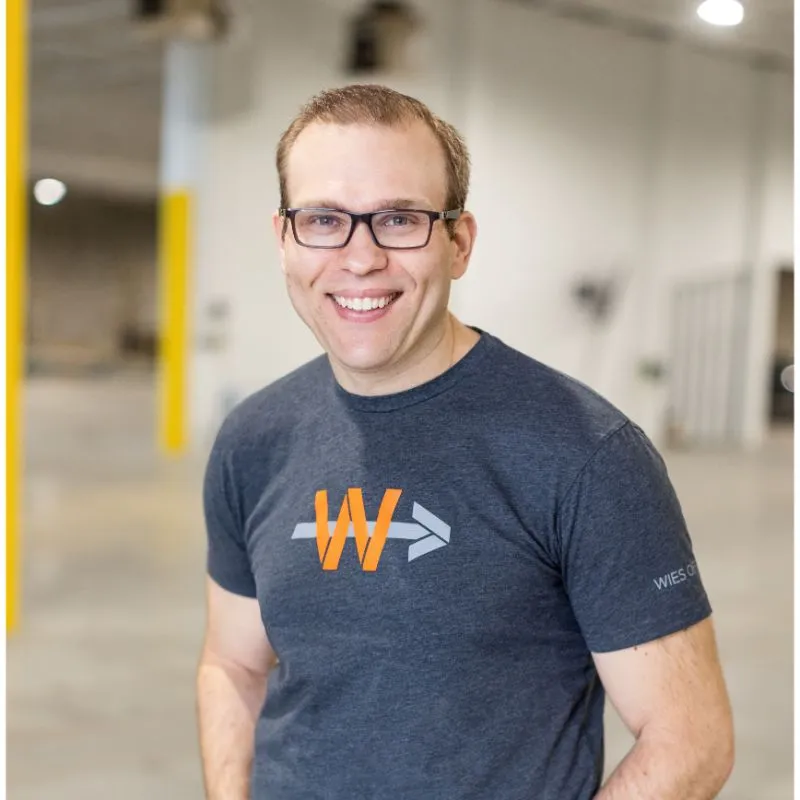
Dan Wies is President of Wies Drywall and Construction, a third-generation family business based in St. Louis. He also serves as CEO of Wies Offsite and Co-Founder of Constructobot, a construction technology company developing tools to automate 3D modeling.
Dan has spent his career exploring how technology, manufacturing principles, and better processes can make construction companies and their people more effective. He is Co-Chair of AWCI's Emerging Leaders Committee, serves on the Board of Directors of Construction Forum, and is also involved with SWACCA.
