.svg)
Key Takeaways
- The biggest financial risks for subcontractors do not appear on the jobsite — they surface in billing data, A/R aging reports, and change order logs.
- Collections aging creeping past agreed payment terms is an early warning sign of project-level cash flow risk that can quietly deplete working capital if left unaddressed.
- A proactive project risk checklist — covering billing completeness, collections status, change order exposure, and lien notice compliance — enables controllers to catch problems before margins slip.
- Siteline's Project Snapshot tool assigns letter grades to collections and billing health subscores, making it easier to prioritize which projects require immediate attention.
If you’ve ever walked into a month-end review and felt that subtle knot in your stomach—“something’s off, but I can’t see it yet”—this post is for you. Construction project risks rarely show up as a single fire. They start as small signals hiding in billing, collections, and change orders. Catch those early, act fast, and you’ll protect margin before it slips.
Below is the practical checklist for controllers and finance leaders (and, increasingly, project managers) to use as a quick project risk scan. Each of these indicators can be spotted in your billing and cash flow data—the same data Siteline’s Project Snapshot feature consolidates into one view so you can identify and address problems before they snowball.
Early Indicators of Construction Project Risk
1. Pay apps are slipping or sitting in draft too long.
Why it matters: Late or inconsistent submissions create downstream cash delays and can drag an otherwise healthy job into “watch” status.
What to watch: Submission timing and approval cadence.
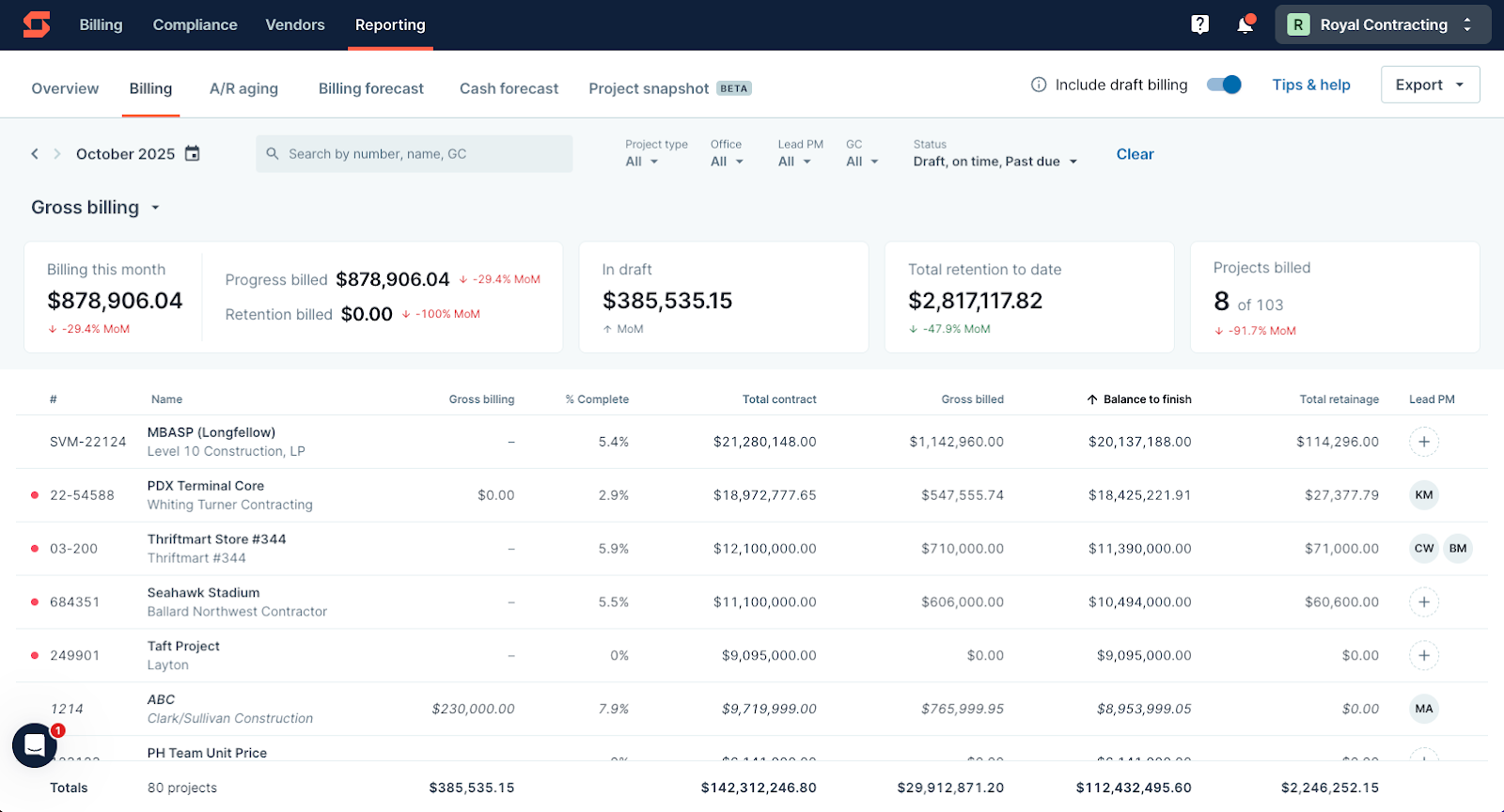
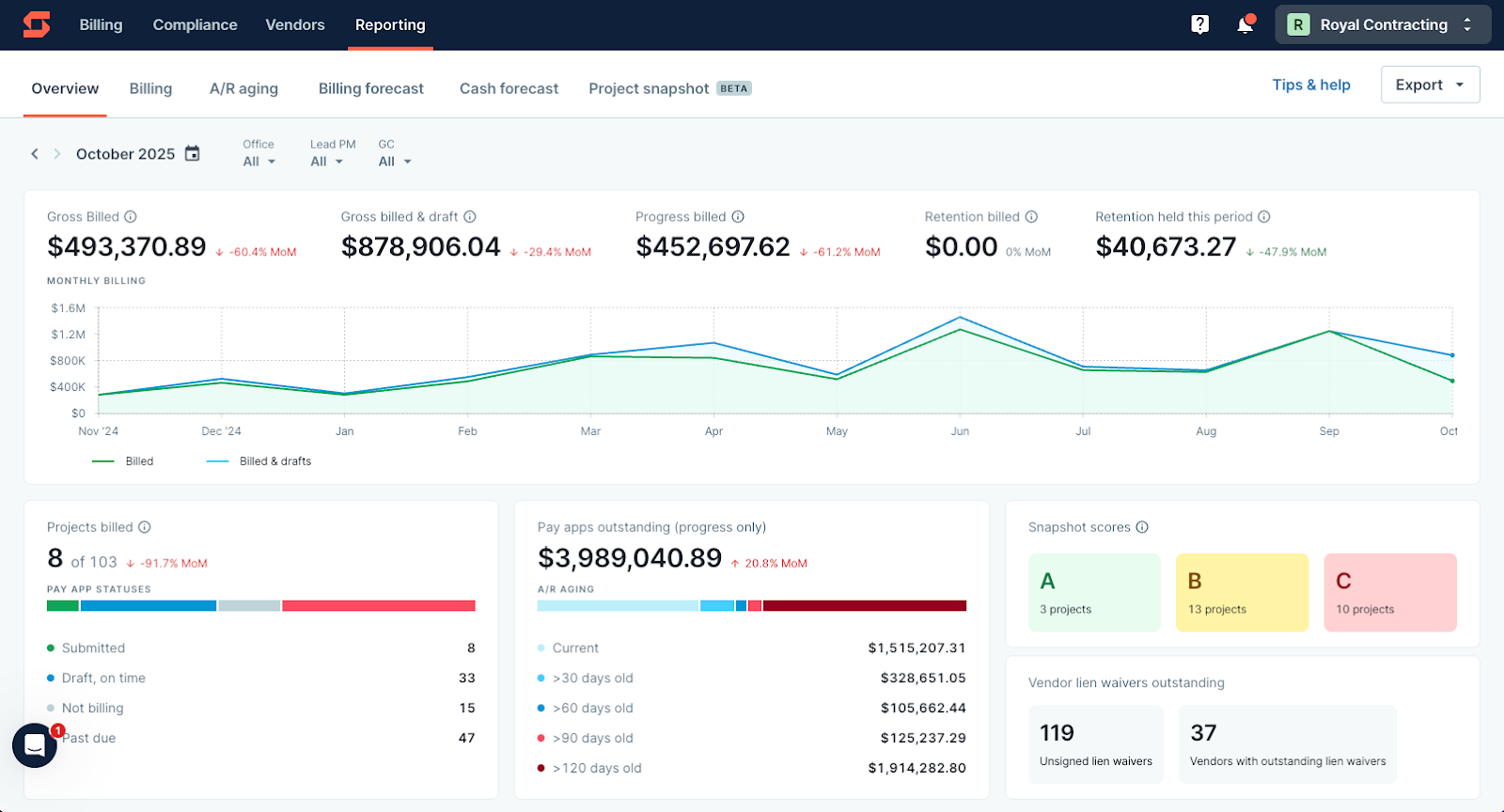
In Siteline, Project Snapshot grades automatically adjust when pay apps are past due, helping you see which job needs immediate attention. You can also use Siteline’s Billing report to see what’s still in draft (vs. submitted), and move it forward before it bottlenecks cash flow.
2. Collections aging is creeping past terms.
Why it matters: Slow-paying customers quietly starve projects of cash. Tracking collections against expected terms helps surface risks before you see them in your spreadsheets.
What to watch: Invoices exceeding agreed payment terms.
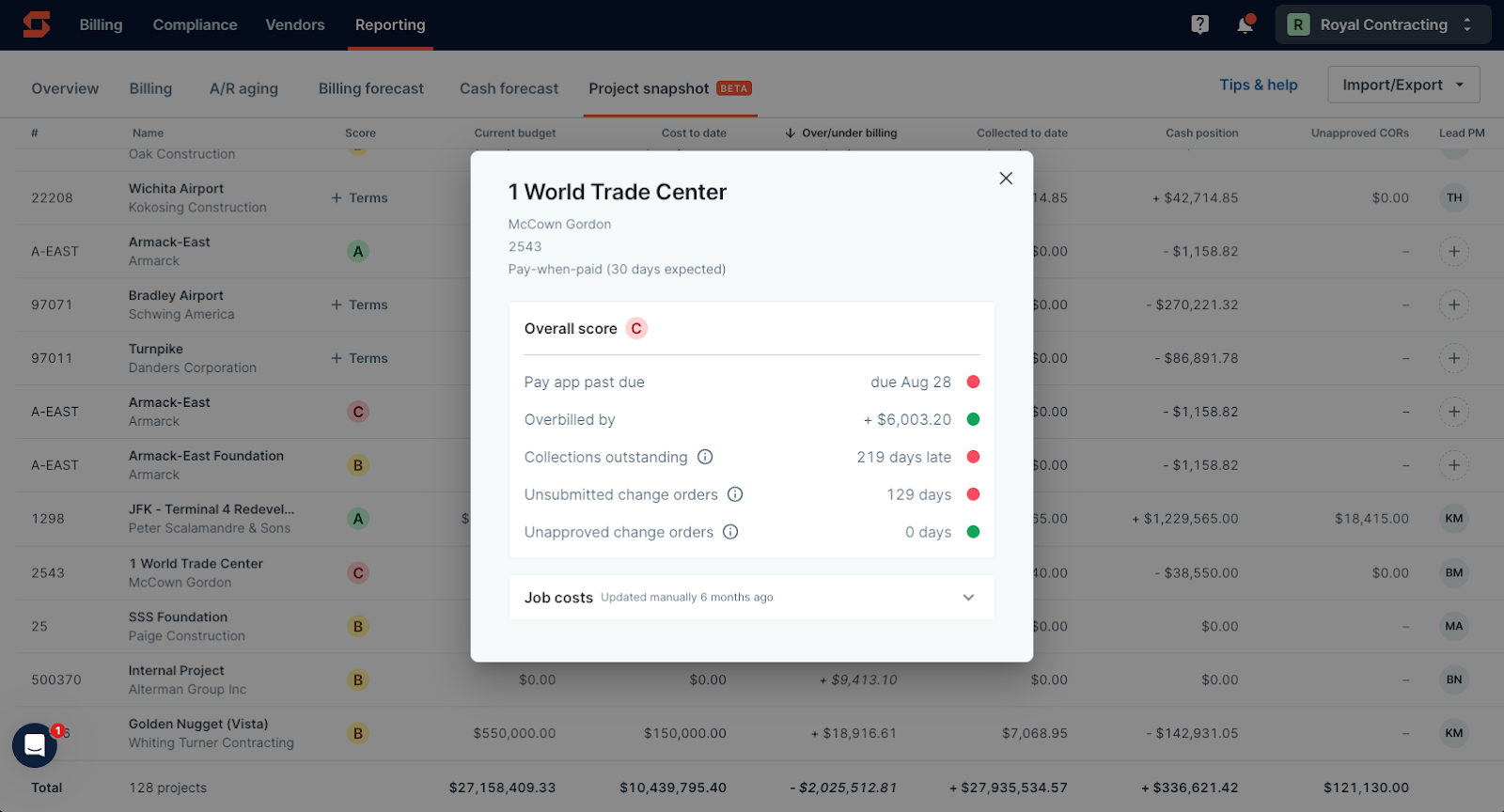
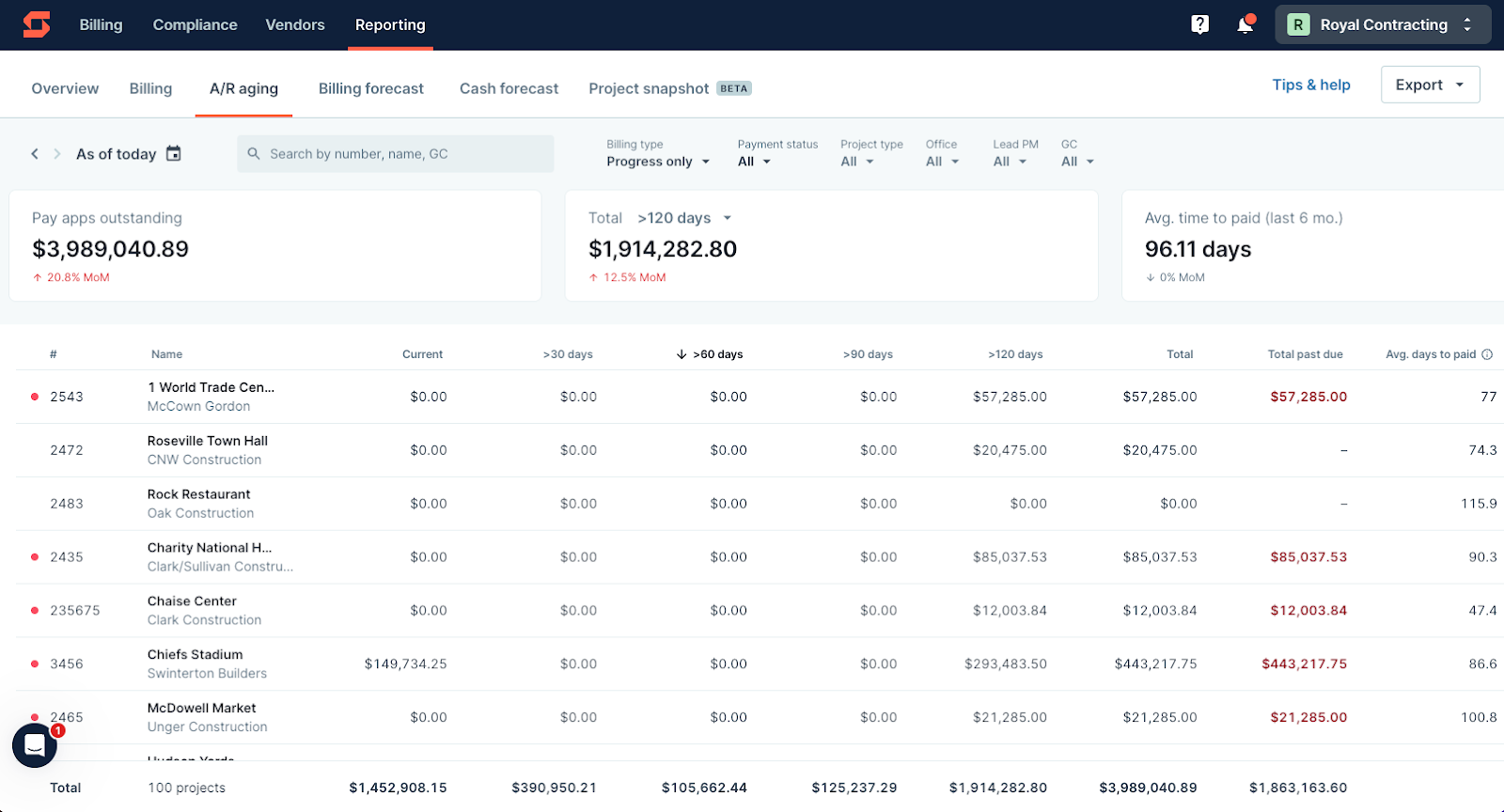
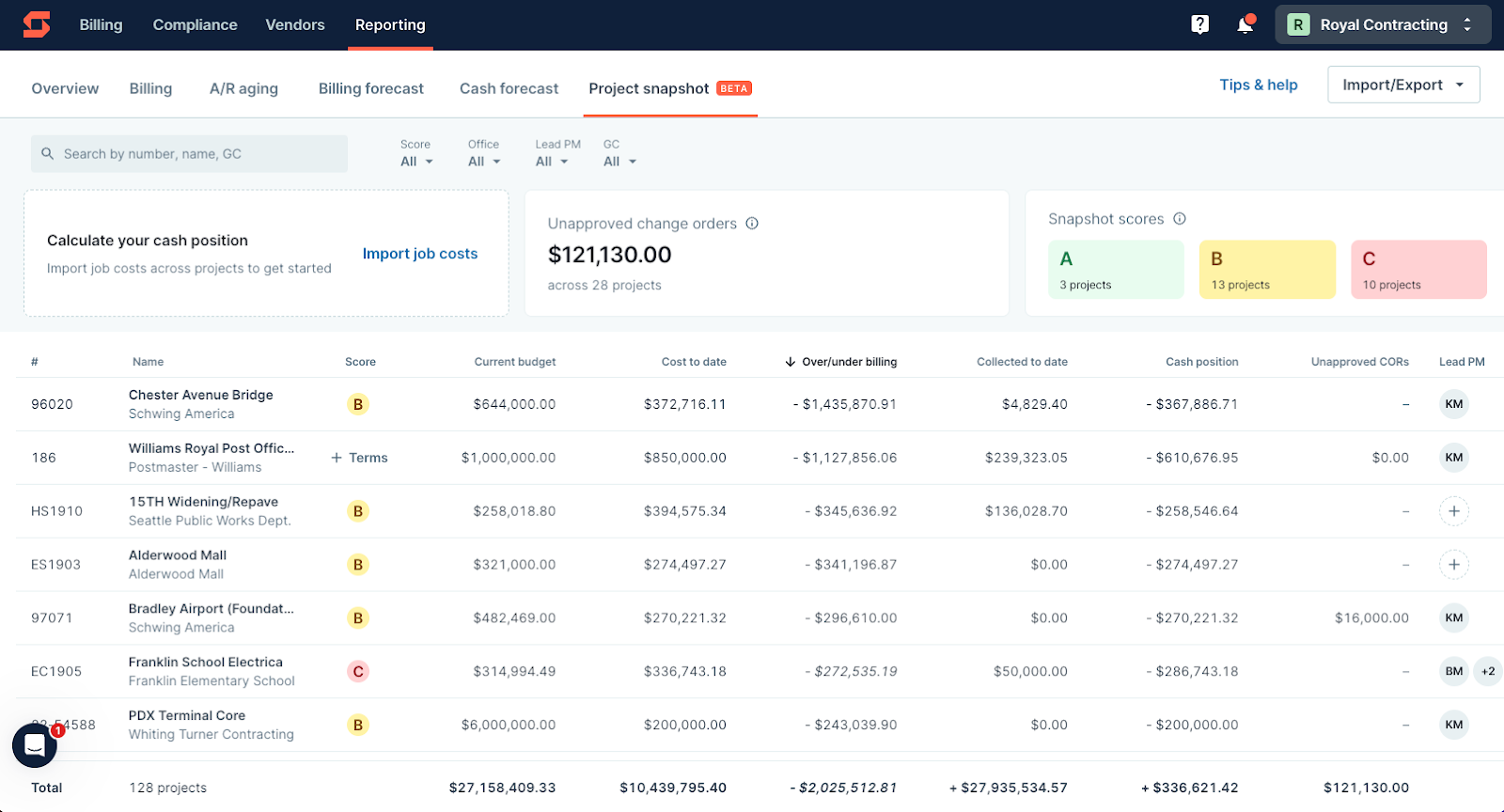
Project Snapshot flags past-due collections in its subscores (assigning an A, B, or C grade to it), and rolls those results into an overall health score so you can spot slippage early. Siteline’s A/R aging report adds context to this, surfacing chronic late payers—among other payment patterns—so you can intervene sooner and reduce exposure to similar risks on future jobs.
3. Cash timing is out of sync with project costs.
Why it matters: Profitability doesn’t always mean liquidity. A project can look strong on paper yet strain working capital when costs outpace collections. Monitoring your cash position offers the quickest gut-check on whether you’re ahead or behind on a job.
What to watch: Cash position trends, particularly collections to date compared to cost to date.
Project Snapshot automatically calculates this figure and flags when it turns negative—a sign your cash flow timing is off. Combine this with Siteline’s Overview and A/R Aging reports to see whether timing gaps stem from internal delays, external approvals, or retention holds that are slowing payments.
4. Underbilling is growing, or overbilling is eroding.
Why it matters: Underbilling often signals scope creep, approval bottlenecks, or forecasting misses. On the other hand, overbilling that’s sliding back toward neutral can mask schedule slippage or stalled change orders. Both scenarios distort visibility and make cash management harder.
What to watch: The gap between earned revenue and billing work.
Project Snapshot incorporates over- and underbilling directly into its grading so you can see when a project falls out of range. Use this with Siteline’s Billing Forecast report to visualize upcoming billings, rebalance allocations, and confirm whether those changes bring the project back on track.
5. Change orders are piling up.
Why it matters: Draft change orders (COs) that linger aren’t revenue, and submitted-but-unapproved ones stall billing and can lead to nasty surprises at closeout.
What to watch: The number and aging of draft and pending COs.
Project Snapshot tracks both draft CO aging and unapproved CO aging as separate subscores, making it clear whether delays are internal (drafts) or external (GC approvals). The Billing and Overview reports add depth, helping you dig into specific projects or partners causing slowdowns.
Applying This Construction Project Risk Checklist
Spotting early warning signs is only half the battle—what matters most is building consistent habits for responding to them.
Run a weekly triage (10 minutes):
- Open Project Snapshot in Siteline
- Filter to B/C jobs
- Click each scorecard to see which signal tripped (late pay app, collections aging, COs, under-billing, cash)
Then drill down:
- If collections are behind → Open the A/R Aging report to diagnose which clients are late, for how long, and by how much.
- If COs are lagging → Check the Billing or Overview reports to determine where to push drafts out or chase approvals.
- If billing projections look off → Use the Billing Forecast to rebalance the curve and reset expectations with PMs.
- If cash is tight → Identify blockers from “cash position” field in Project Snapshot (missing waivers, pending approvals, retention not released) and knock ‘em out to restore balance.
The win isn’t just cleaner reporting; it’s faster recovery. When teams rally around the same live signals, you stop flying blind and start solving the right problems in time to protect margin.
Staying Ahead of Construction Project Risks
The sooner you can spot financial risks, the faster you can act. Siteline’s Project Snapshot gives your team real-time visibility into the same signals covered in this checklist, turning what used to be month-end surprises into mid-cycle course corrections. Plus, it’s available to all Siteline users at no additional cost.
Book a demo to see how Siteline helps subcontractors stay cash-positive, eliminate billing bottlenecks, and protect margins across every project.
AIA®, G702®, and G703® are registered trademarks owned by The American Institute of Architects and ACD Operations, LLC. Siteline is not affiliated with The American Institute of Architects or ACD Operations, LLC. Users who wish to use Siteline’s software to assist in filling out AIA® forms must have or secure the AIA® forms. Siteline does not and will not provide users with the forms.


%202.webp)