


About This Episode
Construction finance teams don’t lack software options. The real question is which problems software can actually solve and which ones come down to process and people.
Keri Adams has seen that question from both sides. She’s a CPA with more than 20 years in construction finance, and she spent more than a decade leading finance at a large electrical contractor. Today she’s co-founder and CEO of Unleashed Technologies, where she helps companies improve their financial operations through outsourced accounting, technology, and automation.
In this episode of Billing & Chilling, Keri joins Claire Wilson to talk about what separates a software rollout that sticks from one that doesn’t, the integration questions most companies don’t ask until implementation starts, and how finance can work better with PMs and earn a voice in operational conversations.
Keri’s main takeaway is that software works best when the relationships around it do, too—whether with your PMs, your clients, or your own team.
What You'll Learn
- What makes a software implementation succeed, and why the real test comes three months after going live
- Which questions to ask before you believe a vendor that says its product “integrates with your ERP”
- How to tell whether a problem needs new software or just a better process
- How finance teams can get what they need from PMs and earn a seat in operational conversations
- Why compliance requirements on each pay app are growing, and how relationships with GCs help keep payments moving
- What finance and operations should be talking about on jobs that are nearly done to protect lien rights
Episode Timestamps
- 00:10 – Meet Keri Adams
- 02:10 – Where Fragmented Processes Hurt Most
- 06:19 – Building Relationships With Your GC’s A/P Team
- 08:54 – What’s Really Behind Finance Burnout
- 12:08 – What Makes a Software Implementation Succeed
- 16:13 – Where Implementations Go Wrong
- 18:03 – The Integration Questions Nobody Asks
- 21:01 – Do You Need New Software or a Better Process?
- 23:22 – Giving Finance a Voice at the Table
- 24:39 – How Finance and PMs Can Work Better Together
- 30:09 – Floating Payroll and Building Cash-Positive Jobs
- 32:08 – Closing the Training Gap for Finance Teams
- 36:04 – Where to Start When Your Team Is Underwater
Key Takeaways
- Start with the bottleneck, not the software. Many vendors try to solve 20 problems and only do five well. So, find where your team loses the most time, then look for a tool that solves that problem well. The goal isn’t cutting headcount but expanding what your team can do.
- Go-live isn’t the finish line. Keri measures an implementation’s success three months later, once it’s clear whether people have moved their work into the new system or are still updating old spreadsheets. An outside implementer can help keep the rollout on track until then.
- “It integrates with Vista” is where the questions start. Most companies don’t know what to ask until implementation is underway. So, ask early whether the integration syncs both ways, which fields it overwrites, and how it handles a billing the GC sends back.
- More compliance means more chances for a payment to stall. GCs now ask for documentation on every pay app, and one small missing document can hold up a much larger payment. A good relationship with the GC’s AP team can turn that hard stop into a quick fix.
- Show up with insight, not just information. Finance gets a voice in operational conversations by adding something the team can’t get on its own. When you come in with questions about what you’re seeing on their jobs, operations starts to see you as a partner and wants you in the room.
- Burnout comes from scattered days, not just long ones. A regular cadence, like a weekly A/R meeting, helps everyone know what you’re working on. It also helps to delegate the 15-minute tasks you keep doing yourself, since they add up and push your real work into late nights.
Transcript
View full transcript
Claire (00:10)
Okay, welcome back to Billing & Chilling, the podcast where we sit down with the people who live and breathe the business of subcontracting to talk about what it actually takes to build a stronger construction business. Today we are talking about a challenge a lot of construction finance teams know well: keeping cash moving and the business financially healthy while working through disconnected processes, incomplete information, and a whole lot of manual work.
Claire (00:34)
Joining me to dig into all of this is Keri Adams, a CPA and longtime construction finance leader with more than 20 years of experience. Keri spent more than a decade as the CFO of a large electrical contractor and is now the co-founder and CEO of Unleashed Technologies, where she helps businesses improve their financial operations through outsourced accounting, technology, and automation. And to top it off, she's also a very active member of CFMA. So, Keri, I'm so happy to have you on the show.
Keri Adams (01:02)
Thanks, Claire. I'm very excited to be here with you.
Claire (01:07)
Love it. So you spent years leading finance from inside a construction company, and now you're working with businesses from the outside through Unleashed Technologies. What made you want to make that shift, and what are you building with Unleashed?
Keri Adams (01:21)
Yeah, what made me make that shift was I did public accounting for the first 10 years of my career, and then I was doing startups out of San Francisco, and I really wanted to connect with more people, more business owners, and be back in that space where you have an impact on multiple businesses and not just be in one. And my husband had a technology company, so I joined that. And what's been amazing is bringing that business operations side to other companies that haven't had it before. A lot of times the accounting side only really looks at the financials, the debits and credits, but they're not getting into compliance. And why are these systems and technology not syncing together, and are they getting the full value of it?
Claire (02:11)
Very, very cool. And we're gonna talk a lot about bridging the gap between operations and finance today. But first question: construction finance teams are juggling a ton on any given day, pulled in a million directions. Where do you see fragmented processes creating the biggest problems for them?
Keri Adams (02:29)
It has a lot to do with the receivables, and how to collect those based on the compliance pieces. In the subcontractor world, you could have anywhere from 14 different pieces of compliance that need to be attached for one month of a collection. So if you have 50 jobs going at once, that's 14 pieces of paper each.
Keri Adams (02:53)
It just becomes this huge bottleneck. And it starts with accounts payable, right? You have to have your material releases, your vendors, and then that rolls all the way through your CPRs. There is so much documentation these days to keep the ball moving. All the while, a subcontractor, if they are billing in current, that's still 30 days past the day they billed. What about the 30 days where they've already paid payroll? They've already had to pay for the material. So even if they got paid at 30 days, which is not common these days, that still could be a 60-day cash flow for them. So those are some of the biggest constraints right now: more regulation and more scrutiny coming down on each pay app.
Keri Adams (03:40)
It is causing these subcontractors to lose that ability to have cash in the bank.
Claire (03:47)
Yeah, I totally agree. At CFMA conferences, I've given a lot of presentations where I'll ask folks to raise their hand if they're required to include waivers from their material suppliers with their pay application. And it seems like all of this type of stuff is getting more and more common. Why do you think that is?
Keri Adams (04:06)
I think it's been there. It's just whether or not the GCs are starting to require it on every payout, versus some would do a check-in every six months, or at the end of the project, they would do a big sweep at that time to pay out the retention.
Keri Adams (04:24)
And I just think as more of these softwares come out there, they're having more visibility, and the GC has the bandwidth to be able to say, okay, I'm going to collect these on a monthly basis, where before maybe they didn't have the bandwidth to collect all of those.
Claire (04:43)
Yeah. So it's almost like some of these software tools that are making it easy to collect this documentation might be making the problem worse.
Keri Adams (04:51)
I would say there's goods and bads, right, for every piece of software that's built for different companies.
Claire (04:58)
Yeah, totally. It's funny because we say that about our product too. It makes it so much easier to collect waivers from lower-tier subcontractors and suppliers, so it's like, might as well just collect them all. We have had customers that have run into the situation where they didn't realize they needed these documents, and then at the end of the day they're trying to get their retention and they're like, we can't pay you, we don't have waivers. So it's like, now that you have a software solution that makes it really easy, just do more.
Keri Adams (05:20)
That's the worst to hear as an accounting person. It's like, okay, we're all expecting that payment to come in at 55 days because we're tracking it. And on day 54, they're like, by the way, this person pre-liened your job and we haven't told you yet. Can you get that produced? Sometimes that might be a $5,000 material release holding up a million-dollar payout. So I really think there has to be a blend in those relationships between the subs and the GCs to kind of work through those. It can't be a hard stop when the compliance risk to the GC is only 1%, versus holding up the sub's million-dollar payment because one box hasn't been checked. So I really think that's where the relationship piece can play a big role for the subs and the GCs.
Claire (06:19)
Yeah. And you're describing a good scenario, where they're like, we're about to process payment and we're realizing that you're missing something. Because oftentimes, as a subcontractor, you realize, we usually get paid in 55 days, it's now 60, something's up, and then you call and find out there's something that you need to track down. But one thing I've advocated for, and it was actually a general contractor that did this in Sacramento...
Claire (06:45)
Unger Construction. I'll give them a little shout-out because I thought this was so cool. They hosted a breakfast where they brought in all of the accounts receivable folks at the subcontractors that they worked with, and they were like, we want to put a face to a name. We don't want it to just be AP at one company emailing AR at another company and yelling at each other. Let's meet each other in person, let's talk about the processes that work and that don't work.
Claire (07:11)
So then you know who to call when something isn't happening for you guys. And I thought that was so cool. And I think with all these software solutions, obviously they're very helpful from a documentation management perspective, but you can't just completely forget the relationship aspect of this business. It's important to connect with people.
Keri Adams (07:31)
Yeah, that's a great, unique experience that they're offering.
Keri Adams (07:35)
We also like to, at the end of the job, sometimes send thank-yous to the AR team at the GC if they've really been a partner with us.
Keri Adams (07:45)
Because what ends up happening is the recognition goes to the executive level a lot of times. But those people that are doing those jobs day in and day out, they love that recognition. When that comes through, it just makes their day. So that's one of the other tools we've used: really building relationships at all levels, not just checking the box.
Claire (08:04)
Yeah. And it's like, the things I do are making a difference for this trade contractor that we work with.
Claire (08:09)
And now that I see that their payment is on hold, I'm just gonna give so-and-so a call and tell them, hey, here's why, this is what you need to do to fix it. Those things go a long way.
Keri Adams (08:20)
Yeah, and those above-and-beyond moments, you can't put a price tag on that, because it's like, okay, you thought about me, you saw that, and you didn't just send that email out. So I think with so much automation, that person-to-person relationship is still really what's gonna move the needle when you need it to.
Claire (08:38)
Yeah, yeah. We've been trying to be really thoughtful about that with our collections tooling too. It shouldn't just be automatic emails like, hey, pay me. It should be, when we reach out to this person, we're actually heard, and this is what actually moves the needle. But there's so much complexity with it because a lot of it is relationship-based. We talked a little bit about burnout...
Claire (08:57)
...especially in the finance role. And it's less about the hours that you're putting in and being in the office late every night, and more about just constantly feeling like you're being caught on your heels, or lying in bed and being like, shoot, did I miss that lien deadline? All that stuff. What do you think puts finance teams in that position, and what actually gets them out of it?
Keri Adams (09:20)
I think that there's just so much coming at them all day. Like, okay, did that payment go out for an HR benefit? Is cash coming in the door? The bonding company needs this report. So it feels like your day is pretty scattered. I really believe in stepping back, looking at that calendar, and setting a significant cadence.
Keri Adams (09:43)
When it comes to accounts receivable and cash, do you have a weekly meeting with your AR team? Do you know where everything is that is not in the current bucket? And have you relayed that to operations? I think as you start finding ways to push that communication out, more people understand what you're working on. And then when stuff comes in, you're like, okay, well, I'm working on this daily report, I can get to this when I'm available, versus taking everything in and thinking you have to do it right then. Being okay to say, this is where I'm at, this is what I'm doing, I can get to this on X, Y, and Z. I think the other big thing is delegation.
Keri Adams (10:29)
There are so many times as you grow within an organization, you've worn so many hats that you think it's just so easy. I could do that real quick, right? I can get that done in 15 minutes. I can do that in 20.
Keri Adams (10:41)
But what ends up happening is all of those 15s and 20s add up to four hours. And then your normal finance role, the work that only you can produce, ends up happening late at night, right? Or early in the morning, whenever you have time.
Keri Adams (10:54)
I really believe in being able to move your work to the right level of person on your team to get it done, and being okay to let go, and then have it come back to you so you get to review it before releasing it.
Claire (11:10)
So ruthlessly prioritize, delegate, set a cadence to make sure things don't slip through the cracks, and also overcommunicate with different functions at the company so that nothing is being held within the accounts receivable team. As I hear that and think about the delegation piece, it's very top of mind, because we just had a customer that got promoted, and she was like, I think part of it was being able to automate a lot of the manual processes that I was doing with all the billing and waiver workflows. Being able to automate it with Siteline gave me the freedom to be able to focus on more strategic things for the business. So obviously there's an opportunity for software to provide the freedom for someone to up-level a bit and work on different things. But I feel like there's no shortage of technology promising to make everything easier right now.
Claire (12:08)
In your experience, what do you think makes a software implementation successful? And on the flip side, where have you seen some failures?
Keri Adams (12:17)
So I think there are two parts, right? Like you said, software overload. Everybody has some kind of solution for you right now, right? And so where's the right place to hone in on to make this successful for your team and for the organization? One of the big things, too, is to have an implementer...
Keri Adams (12:39)
...that isn't the software company and isn't the company. Because you've got to remember, if you're bringing in software, you have people whose day job is not to implement software, nor are they really good at it, right? If you ask an accounting team how many times they'll put in an ERP in their lifetime, maybe two. How many times did they set up payroll? None. I mean, CPAs pretty much stay away from payroll a lot.
Keri Adams (13:05)
Then we get into it and we have to fine-tune it. But you've got to remember, for these people that we're asking to adopt software, it's daunting to them and it's a little scary. And so what do people do when they don't know something? They kind of push it off and make it the last-minute thing. So I think really having that implementer in between the two helps the project stay on track.
Keri Adams (13:28)
I think the big part is, when you bring in software companies, they really just give you all these ideas: well, it could do this, and it can do that, and if you want to do this... Right? The implementer can go, okay, I've seen your business, I've seen this work in other places, these are your options. And so they can be very clear-cut about it. They also can keep the project on track at the same time. And I think what's key with software is not the go-live day. It's three months later...
Keri Adams (14:00)
...staying with them to make sure they actually stop using their Excel sheet and they actually convert. Because a lot of times they're like, yeah, yeah, we're doing this. And then you go back three months later and you're like, I'm looking in here and there's not that much activity. And they're like, well, yeah, I know, I'm still updating this for this person and I'm still doing that. So it's getting them to fully engage in the software. And I think it's checking all those softwares around the ERP right now. The ERP is such a massive database, and a lot of them do things very well, but they don't do other things. And some of these other products that you have around it, you can really bolt on and get a lot of value out of.
Keri Adams (14:48)
One thing I've been excited about with Siteline is that compliance tool. You really want to know where your AR is, your money, right? At the end of the day, for construction, you need cash in the door. And you have to have a tool that you're in all the time. You work receivables every day. There wouldn't be a day that went by where our team wasn't calling or getting...
Keri Adams (15:11)
...a vendor release, or something's happening. And so it's those commitments, and then providing software that makes it easy to see where things are.
Claire (15:21)
Yeah. I think that change management piece is so important. If you have someone that comes in from the outside to help your team, I think the first step is really getting to the root of what this product is gonna do for each individual. If this person's dragging their feet, why? What is the reason that they're nervous about using this product? What do they care about? So I think understanding what motivates people is really important to get them excited about new solutions, 'cause change is hard. Nobody wants that.
Claire (15:56)
I feel like if you ask folks how many times they've migrated an ERP, people will be like, once, and I'm never doing it again.
Keri Adams (16:04)
Exactly right.
Claire (16:06)
People will be like, if they try to switch ERPs, I'm leaving this company. I'm not doing it again. It was terrible.
Keri Adams (16:12)
It's so true.
Claire (16:13)
And what about some things that typically go wrong, like implementation failures that you've seen?
Keri Adams (16:20)
Honestly, people try to rush through the setup side of it and the testing. If you don't get that all down correctly in the integrations between the ERP and the new platform, that's where we see it go wrong. What happens is, I think the high-level person who might be the one to do setup...
Keri Adams (16:44)
...sometimes isn't fully engaged in the project, right? It's like, okay, who actually knows how the systems integrate together? The other big thing with the accounting system is, how do the billings go into the ERP? Do we only send those at the end of the month? And if you want to reverse that, how do you reverse it? Because nine times out of ten, you send out an SOV and the GC says, no, thank you, here's what we're really gonna give you. But then this outside software says, great, you can do your billing here, and it goes right in. That's fantastic. We're like, okay, so...
Keri Adams (17:23)
...walk through a full cycle of what it looks like today and exactly how it will look in the system. Because what tends to happen is you're sold this whole software, and then you get in it and you're like, it doesn't even do 80%. But I think the real issue is the company doesn't actually know what to ask in those initial questions, because they haven't seen the software side of it. So I really think it's, how do you bridge that gap between what the software company is selling and what the company can actually utilize with the systems already in place? And nobody talks about that until implementation starts.
Claire (18:03)
Yeah. I give a presentation on this, and I'll put a slide up with questions that you should be asking regarding integrations. If someone tells you, this integrates with Vista, you shouldn't be like, cool. You should be asking a whole bunch of questions. And I always say when I put up the slide, if you are looking at this slide and you're like, I have no idea what this means, then you need external help to evaluate this software, because otherwise you're gonna buy something that might not work.
Keri Adams (18:30)
Well, even with what you're saying right now, right? It integrates with Vista. Great. Does it go back and forth? Is it a two-way integration? What actual fields will it override? Do you have to have it unlocked? Where is that in the system?
Keri Adams (18:48)
So I find that some of those big questions don't get asked until the very end.
Claire (18:54)
I know. I feel for contractors sometimes when they're evaluating. And I'm very, very proud of our company, being that we never oversell. We don't say, here's something we can do, and then we can't actually do it. We never sell ahead or anything. But sometimes I'll be chatting with a contractor during the sales process, I'll jump in, and I see them not asking any questions. And I'm like, we're gonna do the right thing, I know it's gonna be fine, but you should be asking more questions, just so you know.
Claire (19:23)
My sales team's probably not gonna be happy to hear that one, but...
Keri Adams (19:27)
At the end of the day, they don't even know what to ask, right? Most accounting people can run a financial statement, they can do their monthly close, they can do all of their reports, the banking, the bonding. But the software side, that's not as common to put in.
Keri Adams (19:46)
But yeah, the onus is on the company as well. It has to be a two-way partnership. I know I got excited one time when I saw a company that had a sync where I could actually go in and see, okay, it will go from this vendor to this vendor, or the bill and the invoice date come over both ways. I could actually see it, because a lot of those integrations just happen in the cloud, and it's like, what happened in the cloud all of a sudden? It's over here, it's over here. But being able to actually see the fields that go in and out, I think that's a great benefit for a software company to provide. 'Cause then I think that sparks a few more questions than just, do we integrate?
Claire (20:30)
Yeah, it's funny, because I feel like over time... we started this company almost seven years ago now, and people kind of wanted it to just be magic before. And now people are actually curious to look under the hood and understand things a little bit more. And I think that's just a sign of the industry getting a little bit more advanced with technology over time. But go ahead.
Keri Adams (20:50)
And I think with AI being able to pull data from your company, it's, how open is the API? Because maybe they want it to pull somewhere else and not into the ERP now, too.
Claire (21:02)
Totally. Everyone's using different reporting tools and things like that. But with that, going to CFMA Annual, I feel like the expo floor has grown tremendously over the past five years. There's just software getting thrown at you from every quarter. What advice would you give to a contractor, maybe contractors that you've worked with recently, where you've noticed you actually don't need a software solution for this issue, you just need a better process? How do you evaluate when it's time to explore and implement a software solution, versus when we should be looking internally and trying to improve our internal processes?
Keri Adams (21:42)
I think it has to do with some of the critical factors, like where is the team spending the most amount of their time, and where do you see bottlenecks there? What is your challenge and your constraint? Then go out and find one piece of software that solves those. I think a lot of times these software companies are trying to solve 20 problems at once, and sometimes they can only really hit maybe five well. So find out what that challenge is. I know within the accounting space right now, it's, how quick can you do a month-end close? How is your checklist running through there? Can you find a tool that can go through and do all of your standard journal entries really quickly? Maybe it was taking somebody 16 or 24 hours to do a close. Well, we got it down to eight now.
Keri Adams (22:34)
And so I think it's wherever you can find efficiency for the human. As you evolve in the AI space, as a person and as a company, it's really finding where you can add in those AI agents to do some of that work, and the human's just in the loop on a lot of those things. So I think it's the more hands-on tasks that you can outsource to software...
Keri Adams (23:01)
...that can integrate with all the pieces around it. That's probably what you need to really be looking at, versus, do we really need to add another person? Or could we add software and not have to add another head count? So it's not necessarily about cutting back on employee count. Maybe it's just expanding what they can do.
Claire (23:23)
Yeah, yeah, that makes sense. One of the things we talked about in our prep call was finance teams being maybe a bit undervalued, or sometimes left out of operational conversations altogether. Do you think construction gives finance a big enough voice at the table?
Claire (23:40)
What are your thoughts on that?
Keri Adams (23:43)
I think it's how you position yourself. I do professional coaching for accounting individuals on how they show up and how they add value to the conversation. I think if you're just going to come in and provide reports, something that they could have already read ahead of time, then they're probably like, well, why would I include that person? But if you're coming into that meeting with tactical things, you can say, hey, I'm seeing this on your job, you're underbilled over here, what is going on with the cost? I looked in and it's this material vendor. Is this making sense? Come in with questions for those individuals, so that they know when you show up, you're going to be asking them questions about their job and things that they need to know more about. And then they're going to want you in those conversations.
Claire (24:39)
Yeah. When I was a project manager at a general contractor, I loved our project accountant, but she was terrifying. I became very close friends with her, but I feel like some of the other project managers were always scared. She was one of the only people that actually wore heels at the job site, in our trailer. And you could hear her coming, and everyone would be like, shit. I probably shouldn't curse, but I think that's fine.
Claire (25:06)
But a lot of the information that finance needs originates from project managers and the operations side of the house. So how do you create a strong relationship between the two and avoid those communication breakdowns, and not be that naggy, scary person getting information out of them?
Keri Adams (25:28)
I do think that you have to ask yourself, can I get it any other way than asking the PM, right?
Claire (25:34)
Just try to avoid talking to the PMs altogether.
Keri Adams (25:37)
Not necessarily avoid. It's like, why bother them? Most accounting people have access to millions of reports and millions of different databases and software. If you can get it for yourself, go get it.
Claire (25:53)
But what if they're not putting the information you need into the systems?
Keri Adams (25:57)
So that's different, right? But that's the first thing: is it locked in a field somewhere? Can I pull it? I always think to myself, okay, if it's not in a field, how do I get it into a field so I can pull it, so I'm not asking Joe every time what's going on with that? So that would probably be my first thing. Two is your relationship and how you speak to people when you do show up and ask questions, right? Maybe first you say, how was the 49ers game? I know that you really enjoyed that. Or, I know that your son plays baseball and you coach it. Did you guys win this weekend? Engage with people on a personal level and have that relationship with them. And then you can go into, okay, hey, by the way, I really need your projected costs, because if I can't get that done, I'm going to have to tell your boss...
Keri Adams (26:51)
...that I can't do that report, and I'll have to say your name. And I don't want to do that either. So is there any way we can look at this together, or can we schedule 15 minutes in the next two hours?
Keri Adams (27:02)
What does your day look like for the rest of the day, or is this something we could tackle in the morning? So give them options, too, because they have a million things going on. But I do think the key is, how do you get that information into a system, and how many times do you really have to ask the questions? If you have the software system, like a Siteline, pull it yourself. Be a go-getter and be like, hey, I've tried to look here, I've tried to look here, and I've tried to look here.
Keri Adams (27:33)
I can't seem to find it anywhere in any of our systems. Will you please help me with this?
Claire (27:38)
Yeah. When you said just try to pull the information yourself, projected costs was the one that popped into my mind, where you really need them. Okay. And then one thing that has been very top of mind lately for me is that there are a lot of protections in place for subcontractors, but I think where the system breaks is maybe subcontractors not being aware or on top of deadlines. Everything is so complex, and it's really, really difficult to stay on top of all of your compliance requirements. But one thing that really stuck out to me when we recently did our State of Subcontractor Billing survey is that 56% of subcontractors said that they've missed a mechanic's lien deadline in the past two years.
Claire (28:23)
And in some ways I'm like, what the hell? That's crazy. But in other ways I'm like, can you blame them? It's so difficult. All the states have different rules. There are prerequisite documents that you need to submit in order to protect your rights, and they all have different deadlines. Do you have any tips on what needs to happen internally to make sure that these are being tracked and protected before a deadline slips? Because this feels like such an important thing for contractors to be staying on top of.
Keri Adams (28:51)
I would really circle back to being very calculated about what has to be done every week and every month. Saying, okay, every month or every week, I review the jobs that are at 99%, and I ask that question: are we closed out on that?
Keri Adams (29:12)
Because what happens is the person that's filing that mechanic's lien is not the same person in operations, right? It's going over to the other side of the business. And you're right, that communication sometimes just never happens. The PM gets moving in another direction. And how would they know it's about to be done?
Keri Adams (29:32)
Say the final billing took them 12% and they're closed out. And then you did that three months later, because a lot of the 100% billings come over time. It's not January, February, March, April, we're done. It's January, February, March, August.
Claire (29:45)
It's like the bell curve.
Keri Adams (29:47)
So I would really say there has to be a good cadence in there. And if there isn't a reminder in one of the softwares, it's red lights, right? What are those conversations you have to have every month on a job that is 95% done? And make sure those happen. It's really just about the cadence of the conversations.
Claire (30:09)
Yeah, yeah, that makes sense. You kind of touched on this a little bit earlier in the conversation, but our report also found that 92% of subcontractors floated payroll while waiting to get paid last year, which shouldn't be totally surprising to you. What do numbers like those tell you about the pressure construction finance teams are under?
Keri Adams (30:31)
It's significant, because that could be one project that you're outlaying for, and you have several others going on, right? So it's always this constant spin of, okay, are we going to collect over here? Are we going to collect over there? I also think it really plays into the PMs and the SOVs, and how those are set up from the beginning. Are they front-loaded?
Keri Adams (30:54)
How do you stay overbilled throughout the job? Because that will alleviate the payroll pressure. But a lot of times the PMs aren't looking at the earned revenue calculation.
Keri Adams (31:07)
They're just looking at whether it's billed or not billed, right? They don't typically get into the whole WIP schedule, the revenue recognition, and how we're doing with our cost to date and profitability. Are we able to cover those within two months of starting that project? And will it consistently stay on that trend to be a cash-positive job?
Keri Adams (31:31)
If it's not, how do we get it to be cash-positive? And does that start at the contract level? What is in our contract? What is in that first billing? Are we looking at retention, also?
Keri Adams (31:43)
Once it starts and we are locked into a schedule, sometimes it could be up to 65 or 70 days from invoice date. Now you've got to add on another 30 days, and within that 30 days, you pay payroll. So they're constantly under a lot of pressure. It would be great for the industry to figure out a way for the cash flow to migrate to the labor side of it quicker.
Claire (32:08)
Yeah, totally. And I think that piece of making sure operations is in the loop on pushing toward being overbilled on the project is really key. We have that highlighted in our product, so it's in your face when you're putting together what you're billing this month, to make sure that you're covering your costs. But oftentimes we talk to contractors where maybe that's an afterthought, or they have their accounts receivable folks looking at every single invoice each month to make sure they're covering costs, instead of putting it on the project management team. I feel like there are a lot of different ways to handle it. But compared to other industries, I feel construction finance teams don't always get the same level of training and development. Where do you see the biggest gaps? And why do you feel like construction companies are maybe underinvesting a little bit in their finance teams? Or do you agree with that statement?
Keri Adams (32:55)
I do feel like the complexity around doing a job schedule and the revenue recognition really kicks finance up to another level, to be able to complete a month, complete a year-end, complete an audit, right? So I think that complexity is there, and it's really about trying to find ways to do that more efficiently.
Keri Adams (33:19)
I think CFMA is probably one of the greatest places for a lot of construction finance people, and a lot of people plug into that. I really think accountants need to talk to each other more and say, hey, I'm in this issue, how did you guys get out of that? Or, have you guys seen this before? Because I think a lot of times you just get narrowly focused.
Keri Adams (33:41)
I think there is educational training that companies would gladly allow finance people to attend. I just don't think they know where to look, or where to add that value. As a CPA, I know I have to have 80 hours of CPE every year, so I know I have to go out and look. So that's one of my big things, too, as an accounting professional: work on your personal brand and your contribution, where you want to be, and how that fits with your company too. Make sure that you're working toward where you want to be.
Claire (34:15)
Yeah. I think folks that need to get those CPE credits are forced to seek it out on their own. But we work with a lot of accounts receivable and accounts payable folks that aren't CPAs. I think that's a really good call-out to lean on CFMA.
Claire (34:32)
Posting in CFMA Cafe always elicits a ton of responses. It is such a great community. People are so supportive of each other and want to lift each other up and share their knowledge. So I think that's really great. And getting involved at the chapter level, joining peer groups if possible, I think all of that stuff's really valuable.
Keri Adams (34:50)
Construction payroll is another area where people really need to find a space to learn more. Because you have to really understand prevailing wage, union, non-union, certified payrolls, benefits, credits, all of the stuff that goes into the labor side of getting somebody paid. That's also how you get your AR: you have to have good CPRs and pay the right rates.
Keri Adams (35:16)
So I really think the construction side of payroll is probably the most underfunded from an educational standpoint. It's such a niche little area. I don't think you wake up one day and you're like, I'm gonna do construction payroll, and I'm gonna go get the certification for it. It's just not out there.
Keri Adams (35:38)
Right. So I do think in the finance space, there are a lot of places that you just have to engage in. But it's always the payroll side of the house where I'm like, okay, how can I help you guys? So many issues can happen within payroll that they need to make sure they're at the top of their game.
Keri Adams (35:55)
We had an amazing person before. I loved her.
Claire (36:00)
For a construction leader who's listening to this podcast and feels like their team is constantly being reactive and they're always underwater, where would you tell them to start?
Keri Adams (36:14)
I'd say breathe. Take a minute, maybe go to lunch, and just breathe, right? Just hold the space that, yes, there are a lot of tasks going on and a lot of hard things happening. But we're not brain surgeons, right? That's one great thing about being a finance and accounting person: we can fix it. So bring down the temperature first, and then we'll start diving into what our critical things are. Where are we meeting or not meeting the business obligations? I'll go back to cash, AR, right? If that comes in, everyone seems to be happier, right? As long as you've got that. And then, okay, cash came in, where's it going? I think accounts payable is another undervalued function of an organization, because that's where everything gets coded for financial statements. So if that's done well, your close is going to be spectacular. If you have safeguards around vendors, then you'll make sure not to pay fraudulent vendors, right? How tight and how many controls do you have in that? Then there's also how you're paying them out. Are you still cutting a manual check?
Keri Adams (37:18)
There are a lot of people still doing that because they have this fear of, if I don't sign it and I don't see it, then I'm scared it's just going out into the cloud. So I would just say, start breaking down what is actually the problem versus what's the feelings. If you can strip away the feelings and get to the problem...
Keri Adams (37:40)
...then you can really find a solution. And a lot of times that will lead to better conversations when you're talking with operations.
Claire (37:46)
Yeah. So much comes back to the people side of things.
Keri Adams (37:51)
Yeah, it really does.
Claire (37:53)
Yeah. Well, Keri, thank you so, so much for your time today. We loved having you on the podcast. I am so impressed with what you're doing at Unleashed Technologies, and I know you're just gonna continue to have such a positive impact on the industry. So thank you for everything you do.
Keri Adams (38:07)
Thank you for having me, Claire. Have a great day.
Guest Bio
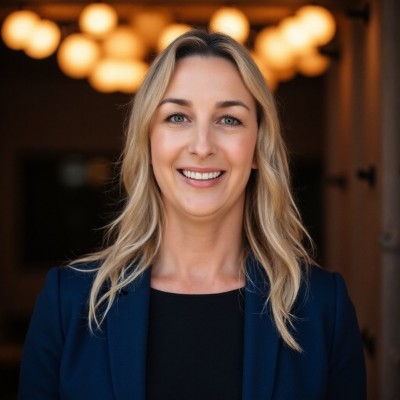
Keri Adams is a CPA and the co-founder and CEO of Unleashed Technologies, which helps businesses improve their financial operations through outsourced accounting, technology, and automation. She has more than 20 years of experience in accounting, starting in public accounting and working with startups before spending more than a decade leading finance at a large electrical contractor.
Keri is an active member of the Construction Financial Management Association (CFMA) and provides professional coaching to accounting professionals on how to show up and add value in their organizations.
