.svg)


About This Episode
When Andrew Baumgardner joined his mother’s glazing business about eight years ago, Guthrie Glass was a roughly $10 million company. His mother, the founder, still handled nearly every job herself: estimating, project management, buyout, contract negotiations, even insurance reviews. His brother James, a CPA who’d worked in tax at Deloitte, joined in early 2020. Together, they started rebuilding the business for a 30-year runway instead of a three-year one.
Today, Andrew is CEO and James is CFO of The Baumgardner Group. The company has grown to nearly $100 million in revenue and added flooring and masonry along the way. The brothers are clear that getting bigger was never the point. They once stretched their teams too thin, and since then they won’t take on growth unless they have people they trust to deliver it.
In this episode of Billing & Chilling, Andrew and James join Claire Wilson to talk about what changes when a family sub scales fast. They cover why cross-selling trades was harder than expected, how they decide whether a finished job was really a win, what financial skills separate project managers from “project witnesses,” and how they vet new technology without wearing out their teams.
They also explain why the goal they care about most isn’t a revenue number.
What You'll Learn
- Why your people should set the pace of growth, and why profit alone isn’t reason enough to take on new work
- What to expect when you add trades through acquisition and try to sell them to the same GCs
- How to track job profitability while the work is happening, and how to decide afterward whether a job was worth it
- How to run the ROI on new technology, and why a small gain isn’t worth it if your team is already fatigued by change
- How ops and finance leaders can work from the same numbers, even when one is more cautious than the other
Episode Timestamps
00:10 – Meet Andrew and James Baumgardner
01:00 – Taking Over a Founder-Run Business
07:18 – Why Your People Should Set the Pace of Growth
09:10 – Bringing Acquired Companies Under One Name
11:00 – Why Cross-Selling Trades Is Harder Than It Looks
14:21 – How to Tell If a Job Was Actually a Win
17:49 – What If Subs Could Rate Their GCs?
20:17 – Slow Pay and the 90-Cents-on-the-Dollar Problem
21:50 – Where Gut Feel Stops Scaling
23:41 – Keeping Ops and Finance on the Same Page
27:07 – The Financial Skills Every PM Needs
31:45 – Running the ROI on New Technology
34:23 – Getting Your Team on Board With Change
37:47 – Measuring Success Beyond Revenue
Key Takeaways
- Let your people set the pace of growth. Every opportunity has to pass two tests: Is it profitable on paper, and do you have (or can you hire) people you know can deliver it with your name on the work? If either answer is no, it’s likely a pass.
- Adding trades doesn’t automatically add customers. Each project’s scope is usually bought out by a different person at the GC, often at different times and from subs they’ve used for years. If you’re expanding into new trades or markets, your existing relationships will give you a head start, but expect a longer ramp-up than you originally planned.
- Track job profitability while you can still do something about it. You make or lose money on a job every day, not just at closeout. Review cost to complete monthly, line by line, and use field production rates to project where each job will land. If you only find out at the end, it’s too late to fix that job, and you may have already bid others just like it.
- Healthy friction between ops and finance leads to better decisions. A cautious finance leader and a bullish operator can balance each other out, but only if they can disagree openly. Andrew and James talk through every major decision, grounded in facts, until they reach consensus instead of one overruling the other.
- Make it safe for PMs to raise their hand. Bad news doesn’t get better with time. Give PMs a regular forum, like a monthly lessons-learned meeting, to flag problems early, so they can get help and other teams don’t repeat the same mistakes.
- Put a number on every new tool. Estimate how many hours it will save, compare that to what it costs, and factor in how much change your team is already absorbing. If the math is obvious, it’s an easy call. If the gain is small, it probably isn’t worth adding to your team’s plate.
Transcript
View full transcript
BILLING & CHILLING
Episode transcript | Andrew and James Baumgardner
Editorial note: Andrew and James joined from the same Zoom connection, so their dialogue is attributed jointly. Unclear audio transcription and proper names should be checked against the recording before publication.
Claire (00:10)
Okay, welcome back to Billing and Chilling, the podcast where we sit down with the people who live and breathe the business of subcontracting to talk about what it actually takes to build a strong construction business. Today we're talking about what happens when a family construction business grows, and really grows. Andrew and James Baumgardner have helped take the business their mom started, Guthrie Glass, from roughly 10 million in revenue to nearly 100 million in just a handful of years. Along the way, they've expanded into multiple trades and markets. Andrew leads on the operation side of the business and James, a CPA who spent part of his career at Deloitte, heads up finance. So we have exactly the two people I want for this conversation about connecting what happens on a job site with what shows up in the numbers. Andrew and James, welcome to the show.
Andrew & James (00:55)
Thank you. Appreciate you having us. Yeah, to be here. Thanks, Claire. I hope to be on you.
Claire (00:58)
Yeah, so pumped to have you guys. Very, very fun guests. I'm really excited for this episode today. So your mom started Guthrie Glass and built a really successful business in her own right. What did the company look like when you two stepped into your roles? And how did each of you find your lane within it?
Andrew & James (01:17)
So yeah, I had joined my mom first, so I'll st I'll start of where it was at the time when I came on board. She for thirty two years, I guess at that point, because it's been about eight years now that I've been working with her, had been an owner operator, knows every aspect of her business, knows the glazing trade, very well. She started her business in Atlantic City. And worked in that market for the majority of her career by the time she was well underway with her business she had three or four project managers working with her and a handful of office staff on the administrative end. And she was very hands-on with every with every aspect I mentioned. She did estimating project management, buyout, she negotiated contracts, she reviewed insurance policies. Because when she had started, she had to do it all because she was the only one in our business. And so as we've grown we've we've changed things.
Andrew & James (02:14)
When she was in the process of retiring or taking a step back. Some of those people that had been with her for a long time were also at that stage of their careers and their life. It was really just her, myself, and a woman named Katie who's still with us, but she was an APM at the time, or it just transitioned to a PM. So it was a pretty small A pretty small staff at that time. Yeah, and then
Andrew & James (02:40)
Doing $10 million dollars a year roughly. And then I joined Andrew A little bit later Andrew said, Hey, let's revitalize this thing, as he mentioned, my mom was getting ready to retire and so she hadn't really invested in whether it's new equipment or new people then by the time I got involved a year or so after Andrew was involved, so it was like January twenty, right before COVID. We had already the wheels were in motion of trying to rebuild the staff, trying to rethink the way we did processes. It was a lot of rethinking the way the business was done now that we were going to try to continue. Because when you're at the tail end of it, no sense in, investing in new ways of new things, new software Stuff that. So we really Turn that up a notch when I got on board is rethinking the way we do business, considering we do have a thirty year runway ahead of us instead of a three year runway.
Claire (03:36)
Yeah. And given how intimately she was involved with every decision when she was running the company, like has it been hard for her to like hand over the reins to you guys?
Andrew & James (03:45)
At first I would say so. But now she's she trusts us tremendously, thankfully. So now, we get along great and there's really not much there's not much of the butting heads as there was when we first got involved. Because I guess over the years we've showed her ability to, manage and think about things the right way. Not to say we did it on our own, yeah, certainly Growing up in a house with her, we learned from her and my father on how to think about things and treat people and stuff like That. But she's trusted the way she's seen enough. It's it was a lot easier for her to let go of the reins a bit after she was able to trust us, which came, relatively quickly thankfully.
Andrew & James (04:30)
I just to add to that. I don't know that it was it wasn't as much of a like trust factor as we I wasn't competent in the things that she was highly competent in. So, if it if it was something that we proved that we could do well, she was much more comfortable. But there's a lot of nuance to a subcontracting business and particularly glazing, that she knows the back of her hand So It wasn't something that estimating, for example, wasn't something I could just jump right into. And so there was a lot of overlap for a long period of time. And our goal was always to give her that retirement that she's been working towards. And, so I had to learn as quickly as I could to take things off of her. And so that's kind of how that transition period was for quite a while.
Claire (05:18)
Yeah. You guys have given her like such a gift by giving her that peace of mind, knowing that she's handing the business over to people that she can trust that are going to grow the business and she can, spend time with her grandbabies.
Andrew & James (05:32)
She's certainly given us more than we could ever give her, but we were we were happy To provide that to her 'because she's been looking forward to retirement when she put in, forty years and it's a tough business. And it's a it's something that you got to come In fight every day to win work, get work done and get paid on the back end. So she certainly has put in her time.
Claire (05:55)
Yeah. Yeah. Growing up, it's funny because no one in my family was in the construction industry. And I was always I was a builder from being a little kid. They were, doing work on my house and I was like stealing bricks and like building something in the backyard. And I built a tree house when I was in middle school. I was so into it and it just kind of slowly like proved to be a natural path. I loved math and sciences and physics and I became a structural engineer and it was just like It was like born with the like goal of wanting to do this. But it's funny, like for you guys, it was probably like In your face all the time. Like did you always know that you wanted to follow in your family's like path and your mom's footsteps or did it take a while for you guys to get there?
Andrew & James (06:37)
For me, no, certainly not. You mentioned
Andrew & James (06:39)
I'm a CPA, I'm a tax accountant, or I was a tax accountant at Deloitte to your point I was always a math numbers guy but no, I never saw myself getting in into the construction business. I'm not a particularly Good handyman. Construction is construction Is not something that comes naturally to me. I've had to work at understanding it. Thankfully I think Andrew and I balance each other out in that respect. But no, I always figured I would work with family one way or another, but didn't particularly think it was going to be in construction. I thought we'd branch off and do something else. But
Andrew & James (07:17)
Here we are. So
Claire (07:18)
Yeah, cool. Well, you guys have grown a grown a ton in the past like five or six years, but you've also said that you're not interested in getting bigger, growing the business just f for the sake of getting bigger. How do you evaluate whether an opportunity is actually worth the growth that it could bring?
Andrew & James (07:34)
I guess what we've always we've always made in the point to in our growth make sure that we were protecting the reputation and the brand. And as you get bigger that becomes a challenge, as you and it and especially if you get bigger quickly. And so, we got to a point where we were stretching ourselves very thin. And we were stretching our people very thin and we were trying to rely on people that we didn't know that we've brought in recently. And so After you experience that, you're kind of a little more gun shy or, you selective about what growth opportunities you pursue. So I would say that, as we grow, that's something that we're keeping that's at the forefront of our minds is to do we have the people on staff or can we obtain the people that we know and not think but know.
Andrew & James (08:24)
Are going to be able to, live by the reputation that my mother had started forty years ago. So that's that's what I'd say is probably yeah right. And to piggyback on that, our growth bottleneck is our people, which I think is the right bottleneck to have in my opinion, is you don't want to outgrow your people to where you're just trying to find anybody to fill certain roles or, even if a business opportunity Looks it could be a good opportunity. If you don't have the right people in the right seats, especially with your last name on the business, things can go sideways. So, if it's the right opportunity, the pro forma of course we model things out, right? You got to financially look at okay, is it a profitable opportunity? And if Both if both answers aren't yeah, then we're we're going to stay away.
Claire (09:10)
Yeah. You mentioned the like reputation and the brand. Andrew and I actually worked at the same general contractor for those listening that got acquired and it was an interesting transformation to kind of witness while being there of like, did we keep the original brand which had the great reputation in Manhattan, or did we take this more like global name? And you guys have had some growth through acquisition as well. And how do you guys Think about that with the different individual companies. Are you keeping the Palermo and the Guthrie name? Or are you like trending towards just being the Baumgardner group?
Andrew & James (09:44)
Well, just I was working as a subcontractor for that for that firm that you were with. I wasn't on staff there, yeah.
Claire (09:50)
Really? I th okay. I thought you were saying you worked there and I was like, What? Okay, you were
Andrew & James (09:54)
No, I worked I Worked really I worked really closely with them. Yeah, I worked for them on Yeah. Yeah, yeah. No, I was a subcontractor in the Build It Back program in New York. But yeah.
Claire (09:58)
Okay. I was like, I never saw that on your resume. What are talking about? Okay. Okay. So correction, Andrew Worked for a subcontractor that worked with the GC that I worked for that got acquired.
Andrew & James (10:10)
Yes. Yes. Yeah. Yeah, no problem. We're familiar with the age old adage of these acquisitions and them going poorly and people losing their culture and implementing Processes that don't fit and we've tried to do that as carefully as we can. It's never you're taking two establishments that have been around for a long time and they have a lot of Deep rooted things that are important to them. And so how do you how do you fit them in together to work well? It's a work in progress and you got to do it slowly and delicately. But I th I do Think we've done a decent job at bringing everybody under the umbrella of the Baumgardner group So when we sell to clients, we can present, multiple trades that we perform.
Claire (11:00)
And part of the thinking behind like expanding into multiple trades, you have glass, flooring, masonry was that you could like cross sell those trades to a specific client. But you said that kind of panned out in a way that was different than expected. Can you explain that and talk about how each business kind of operates in its own market and what did you learn about diversification that you didn't appreciate going in?
Andrew & James (11:21)
Yeah, I guess I'll answer that one just on some more on the operations and sales side. But the idea was that we can take a business that's in one market and introduce to a different market, or the market that the other entity like Guthrie, for example, is operating in and introduce additional trades, which we have done, but it's it hasn't been as seamless. And I think there's a Couple of reasons for that. One of them is that this business of working with general contractors is relationship driven and what have you done for me lately type of thing. So w if we're if w they're not used to buying flooring from us or they're not used to buying glass from us and they have a couple key people that they've gone to for a long period of time, twenty, thirty years It's it can be it can be a difficult barrier
Andrew & James (12:14)
To overcome. And then also, there's different markets operate differently. So, the quality that our flooring team is expected to produce in the market that they've been in, in Atlantic City and a lot of high end casino work and a tile and, doesn't transition as well to some of the, I don't want to say I don't want to say lower end 'because that's n that's not what I'm saying, but if you're if you're doing public work For example, the standards, aren't necessarily the same and the products aren't the same. And so, there's more to it than just knocking on somebody's door and saying, we used to just sell you glass, now we're selling you flooring, and now we're selling you masonry. There's more there's more relationships there from suppliers and field staff and clients that all has a lot to do with it. So we have been continuing to merge our clientele, but it wasn't as seamless as
Andrew & James (13:09)
We would have expected it to be. And yeah, another thing too is that the different trades get bought out at different times and oftentimes by different people, right? So the same Person at a general contractor who's buying out the masonry subcontractor, which we do, usually isn't the same person who's buying out the the carpet subcontractor, which we also do. So Yeah, and it completely different times, you said. Right. It's different people at different times, years apart at times. So we try to if we try to cross, sell to your original point to person A who we're doing masonry for and we say, yeah, we also do flooring, that a lot of times is irrelevant to that person
Claire (13:52)
Yeah, especially on the bigger projects, you're going to have completely different people owning different scopes. But I w there is something to be said about the reputation of, someone will say, Hey, these guys bid on this project and it looks they're doing X for you. Like, how are they doing? And you can be like They're amazing, you should consider them. It'd be great to Have, them working next to each other because it's ultimately under the same umbrella. Yeah.
Andrew & James (14:15)
Yeah. We're we're getting there slowly but surely.
Claire (14:21)
Yeah. Keep grinding away. Okay. And then once you once a project is finished, how do you evaluate whether it was actually like good for the business and a win and whether you want more it?
Andrew & James (14:31)
Yeah, so there's the first thing my mind goes to obviously is the is the how to deal profitably. We that's something yeah, for sure.
Claire (14:38)
There's our finance guy.
Andrew & James (14:40)
That's something that we I'd say with near certainty that I think we do a better job than our competitors is insights into our job profitability. We're very diligent with our cost coding, with our clocking in and out on the right jobs. So we know line by line, job by job, how things are going, where we did better than what we budgeted, where we blew the budget, how much of our project manager's time is being spent on different jobs. So first and foremost, was it a profitable job? If it wasn't, sometimes there are sometimes it's our fault and you can't necessarily say, that was a bad job. It could have been a good job and we missed something on the bid. And so you can't hold that Against the project manager of the field or even the client. And then and then of course there's the getting the feedback from our site foreman and from our project managers on how was the client work for, how was the their site super?
Andrew & James (15:34)
Work for their project managers. So as Andrew mentioned a little bit ago, it's a relationship business in the markets we're in. And so we tend to do a lot of work for the same clients. And the longer you work with them, you understand how you guys work together and hopefully that translates in the P&L as well. But yeah, so between
Andrew & James (15:55)
Yeah, I would say there's it would be nice if we could have a weighted scale somehow that had, how were they to work for were they are they fair? And then you have the profitability and then the payment too. And it's like, it would be nice if we could figure out a formula, to say, okay, this person's very profitable, very good to work for, they're a slow pay, okay, you could deal with that. Some are more important than the others, but those are the three most important things I would say. But a lot of it is gut feel. You can't have a you can't have a formula for everything. There's just a lot of decision making that's made f by our project managers and us that has says, does this feel right?
Claire (16:34)
Yeah. Do you guys store that information anywhere when you're getting that feedback from people on that certain client or that project? Or is it just kind
Andrew & James (16:43)
It's
Claire (16:44)
Of ends up building up that gut feel?
Andrew & James (16:46)
I think it ends up building up that gut feel. There's so many factors at play, right a client might have eight different project managers that we work with and some we might really enjoy working with, some not so much. Th the ultimate client where we're working could have a big impact on how the job is working, whether it's a university or a casino or whatever. So To try to make sense of all of these data points. And track them. We have tried it's more you just got to keep your ear to the ground, keep hearing the same names, the same clients, And then you kinda you kinda get a gut feel. Or there might be some sort of formula going on in our heads or our guts or something, but no, it's not we've got a scorecard per se We do track the profitability by client, but as far as
Andrew & James (17:33)
How often we're getting paid and whether, change orders are getting approved or, how our project management feedback that is not tracked, but we do have a profitability and then in reviewing that we'll have open discussions about, what we think of working for that particular client.
Claire (17:49)
Yeah. And we are layering we have time to payment within Siteline and we're layering in the profitability aspect of it. But This is exactly what I'm like trying to do with Siteline from a product perspective right now. You'll notice there's a customers tab now in the product And you can see each client and then you'll be able to see how profitable are their jobs, how fast do they pay us. We can add in stuff on change orders. And then I want there to be an opportunity for like project teams to add notes and comments too. So over time you can start gathering the data on specific clients and figure out who you want to continue working with. Because I think this is something I've just noticed over time for being in the industry is that the feedback loop isn't always there. You bid a project, the project happens, and you end up losing money on the job Does it make its way back to that like estimator that bid on it, if it was bid poorly,?
Andrew & James (18:41)
And you're and you're right onto the next job too. So yeah, that it is you got to force yourself to make that feedback happen. Yeah, a hundred percent.
Andrew & James (18:48)
To the point of Siteline we would love that would be awesome. I would love to see that. I'd love to see if we could overlay in how profitable are we and how quickly do they pay. Something we've joked about. Is we should start a rating system for general contractors with that all the subcontractors participate in and then it published and then being published annually because okay that's awesome. We
Claire (19:03)
Yeah. That's it's literally what we're doing.
Andrew & James (19:09)
We've talked about that and saying it'll be it'd be great to see especially if it's a new client that we haven't worked with, if we could go and look up and it's not just the, four Google reviews from people that work there, but if it was, people from Siteline that when you go to close
Claire (19:20)
Yes. So
Andrew & James (19:22)
Out a project, you give a star rating of one to five and then that's aggregated Between all their subs. It Holds it holds it holds our clients accountable too. Burning bridges for that we go.
Claire (19:32)
Yeah, and like having benchmark Data of you get paid in this time frame with that specific client, but like everyone else is getting paid faster. So you're doing something wrong with this specific client I think is also helpful. But yeah, I think you mentioned clients will care about this data. That's part of our goal at Siteline and one of our missions is to like flip the script a little bit because it's been so unfair for subcontractors historically. You guys are always put in a position where you're financing the projects. And how can we raise awareness with this? We're We're building products specifically for the trades because these are the people that we feel like struggle the most with this. All of the risk is put on the subcontractors as it relates to payments And, general contractors are ultimately they pass the money through when they get paid, but like
Andrew & James (20:17)
Yeah. No, ninety days, a Hundred and twenty days. It's gotten my mother when she was in here every day, she'd talk about the way it used to be and It's gotten worse even from when I've started in the business as far as turning around payment. Our other brother, is a j is in the general contracting business and he prides himself on paying people well and paying people quickly. His subcontractors so that they'll they'll take a bullet for him. I would think it could be something that general contractors could embrace as well to say, hey, we have s we have 30 day terms or we have 60 day terms, whatever the terms Are, we're paying within five days of our terms. Here's here's the feedback from our subs. You're going to get a lot more loyalty and participation from subs if you're paying them when you say you're going to.
Claire (21:00)
Yeah, we can celebrate
Andrew & James (21:00)
To expand their subsidies.
Claire (21:01)
The ones that are actually treating subcontractors fairly. And like something that I struggle with that I see so often is these opportunities for an early pay program. And it's like take it at a loss, and it's Like, why should I get paid 90 cents on the dollar just to get my money like on time? It Almost it almost has the reverse effect because it incentivizes. People to pay you slower because then it forces you to like, Okay, fine, I'll take ninety cents On the dollar 'because I just want my money and that bothers me. I don't that.
Andrew & James (21:35)
Yeah, in no other industry do you do you get to do that? Like, you don't go To Home Depot and buy something or you're go to a a restaurant and then slow pay them and a week later or weeks later, offer them, less than what you had bought it for, like so.
Claire (21:50)
Exactly. Okay, back to the gut feel thing. One of you guys made the point, that you can run a $5 million or maybe even a $10 million construction business on just like good intuition and a strong sense of the business. But as you grow, you need to start paying attention to like certain things that,. Gut intuition isn't going to tell you. What are the things that as you guys have scaled, you've needed to like keep a closer eye on?
Andrew & James (22:14)
We're we're fortunate to have an eye on just about everything because of how good of a job James's team does and we really leaned into we use Sage 100 and so we've got a good a good accounting system where, everything's tracked. But I think it's I think it's not it's also it's about the size, but it's also about the speed in which you've grown. And so, if you I can it be done at a $50 million dollar year or $100 million dollar year? Volume maybe you're not going to be able to go from fifty to a hundred doing that. Could you could you grow at five percent a year with people that and that you trust and that's probably doable. But if you do want to grow your business, I wouldn't suggest it by the way, but I think it is achievable If you if that if that can be done. But if you do want to grow your business more quickly, you're going to have to have a lot of
Andrew & James (23:09)
Process in place and good accounting. And I think that's something that's most construction companies, are missing. So we're and we're fortunate to have that. But your profitability is going to be your most important. Payment terms matter, your overhead matters, but but if your jobs aren't profitable and you're not sure of their profitability, if you if you think You did well on this or you took a little bit of hit on that, yeah.
Claire (23:32)
You don't find out until the end Of the job.
Andrew & James (23:34)
Yeah, if you're finding Out at the end of the job you're you're in a bad, bad spot. As somebody who's been there, it's a tough place to be.
Claire (23:41)
So you guys, brothers, Andrew on the ops side of the house, James on the finance side of the house, a lot of our clients, I feel there can be friction between ops and finance. How do you guys handle like, if one person wants to take the business in one direction, or how do you guys make sure that you're always looking at the same picture when you're making decisions? Question.
Andrew & James (24:05)
We do rock, rock, paper Scissors shoot, and flipping coins. No, James
Andrew & James (24:10)
You can go ahead. Yeah, so I think naturally I'm a bit more conservative, being the numbers guy, the finance guy. I I feel sometimes I feel bad 'because I'm always pointing out what if, what if. But I think It's I think it's a good balance. Andrew's pretty bullish on Opportunities and so we play off each other pretty well. It helps to it helps that we're we've got we communicate all the time. We ha we hang out outside of work. We're we're very comfortable having, t tough discussions with no hard feelings, because of the relationship we have personally that helps a lot, to be able to say what's on your mind and not
Andrew & James (24:50)
Have to dance around something or sugarcoat how you feel about it. So I think just the fact they're able to communicate honestly, and openly goes a long way in coming to a consensus. And it really has been knock on wood, consensus. We haven't we haven't done anything, working together for about seven years now. We haven't made any decisions where it was brute force one over the other. We talk it through. And I said, I'm probably a little bit more conservative. But then I would just be stuck in mud if it was just me and maybe Andrew's a little too aggressive and he'd be, falling off the rails if it was just him. So For sure, for sure, by the way. So yeah, we play off each other well, in that sense and we've got
Andrew & James (25:36)
Good communication. So with those things I think that's Yeah, but yeah, like James said, we're we get along great from a personal perspective. We don't hold back we've we've never left a meeting or I guess maybe not at the end of one particular meeting, but after we've worked it through we've we've always been on the same page. I think part of it has to do with our backgrounds and experiences and our positions, but mainly because we've got a lot of the same similar ambition and A thought process, try to try to make decisions based on facts.
Claire (26:12)
Mm-hmm. I wonder if your mom could have predicted when you guys were little kids, where you would end up in the business. Like,.
Andrew & James (26:18)
She probably would have thought we'd all be in jail, but Yeah. We Weren't exactly the best kids in the world. So Yeah. Appreciate it.
Claire (26:28)
Well, you turned out great. But yeah If she knew like James would be the conservative finance guy, like probably not.
Andrew & James (26:37)
I Yeah, I don't know. I've always been a good math Student, but yeah, I don't think she ever envisioned us being in this business, to be honest. They kind of always, my mom and dad who was he was in construction himself from growing up, they kind of always thought, you guys could do something else, you guys could do different things, bigger, better things. Construction industry's not an easy industry to be in. So they always wanted, something different for us, at least when we were younger. But now that we're in it, they're very supportive of. Course but yeah I don't think they saw us being in the industry at all.
Claire (27:07)
Cool, love it. Well, okay. So we also talked a little bit about like project managers and what make them successful. And I think a big piece of that is having a deep understanding of the financial workflows. What do you think are the most important financial skills for a PM to actually be successful? What should they be paying attention to?
Andrew & James (27:26)
Yeah, from the financial standpoint, projecting your costs. What? We do cost to complete monthly where we review Job by job, line item by line item, okay, how we're doing against the budget. And then of course you have to project how we're going to could continue to do throughout the job and the best predictor of future behavior is past behavior, I think. So like productions, for example, you got to know that Hey, we're getting, X number of openings per day if if on the glass side of things, and then extrapolate that to say, Okay, we know what one mandate costs us X dollars and it's going to take us this many days and to be able to put that into a formula and then throw into your cost complete meeting. That way you can ultimately predict, wow, we're we're only, sixty percent done the work on the job and
Andrew & James (28:19)
We're already through the entire budget. What went wrong? To capture those things early, right? There's a guy we follow on LinkedIn, Scott Kimpland Shout out Scott. And he always says, you could either be a project manager or project witness. And you don't want to just say what happened on the job when it comes to that and you got to manage it as it's happening. And So just really being able to know what's going on, how many Units of measurement you're getting done per day depending on the trade. And then and then to be able to predict out, okay, the conditions might change. You might be on a higher floor next. So you have to say, Okay, well, we're not going to be as productive on the higher floor if we're waiting on the elevator to get up, stuff that. So
Andrew & James (28:59)
So to be able to look at the job of what needs to be done and then to put those into numbers is a very important thing to for the health of a business to know. Yeah. To know how you're doing because you don't just make or lose money at the end of the job, you're making or losing it the entire time. A lot of businesses I think don't know until the end of the job if they made or lost money. And they might have taken a dozen other jobs just it. And they're running it and then it's too late before they can do anything about it. So yeah, really just Being able to translate the field labor into Into productions and putting dollars to that and projecting it out. Yeah, cost control And cross projections would be, that's that's the most important thing is as a PM
Claire (29:46)
Forecasting, looking for like gross margin slippage, you Know, finding those like leading indicators of where things might go wrong and where you might be losing on the project. And then I think also a soft skill that we don't like talk about enough, which I think is hard to coach, but I guess it's like creating this like safe environment where people feel they have the trust and a and a voice, but a place where like PMs can actually like raise their hand and be like, Hey, things are not going in the direction that we expected for this project and I need help. Or instead of just trying to quietly brush things under the rug and like fix red flags before anyone notices, like creating this space where it's you're celebrating when someone voices something that's bad because you'd rather have them tell you.
Andrew & James (30:33)
We Actually bad news doesn't get better with time. Yeah, that's a hundred percent true. And we We have a Monthly meeting dedicated to exactly that to try to learn from our mistakes. So we encourage that, speak up. Let's and let's learn from it. Yeah, because to your point, not only is it a problem if it doesn't come up for that individual and for our awareness, but if it's not coming up to all the other project managers or estimators that are making similar decisions in that time frame, you're missing opportunities to correct something earlier on and educate the rest of the staff. If failure really is an opportunity to learn and that's the way it should be taken, then you don't want somebody failing and then learning in a silo and so how do we share that? And so that's the intent of the of the monthly lessons learned meeting.
Claire (31:21)
Yeah. Yeah, that's great. I love that you guys do that.
Andrew & James (31:22)
Which we're not we're not great at everything by the way. We've we've we've continued to Build these things. It sounds great, but trust me, it's it's A work in progress. There's a lot of things that we could do better and are trying to do better at. But that's something that we've implemented to try to bring those issues to light and get and get better at across the board.
Claire (31:40)
I think if any leader says that their company's doing everything right, they're wrong. You always you can Always get better, you can always learn, you can always improve. But cool. Okay. And then you guys looked at an AI contract reading tool and ultimately decided like Ctrl+F worked just fine. We've been doing this for a long time. We know what to look for in our contracts. How do you tell whether a new technology will actually make a difference or just Create more work or it's just this shiny new thing that people are talking about.
Andrew & James (32:08)
Yeah, so I'm constantly paying attention to different forums, newsletters, websites, stuff for new technologies out there that are out there and I'm always vetting them to see if if they would work for us, if the ROI is there. That's ul ultimately Claire, that's what it comes down to is the ROI there, right? It's going to cost you if a new Contract reading software is going to cost you, I'm making up a number, ten thousand dollars a year and it's going to Save you, what if you say, Okay, we get a hundred contracts a year, it's going to save me, twenty minutes per contract. That's what I say, a hundred contracts, twenty minutes. It's, two thousand yeah, two thousand minutes. You do the math, you say, Okay, the hourly rate on that is Did it save us the amount of money? Sometimes it's so clear when you put it that way that okay, this just isn't for us.
Andrew & James (33:00)
Now on the other side of things to give you a plug and to give Siteline a plug, it was quite the opposite was true, right? We ran the same, okay, we're going to save this much time per month doing our AIA pay applications the way we've done them. We're going to save this much time doing the lien waivers automatically and the ROI was really there. So we try to I try to estimate man hours. Or woman hours behind something If it's incremental usually won't do it just because there's the change factor people those no sense if you're yeah then the cost of the change and the attitude you got to think about that too is if you're constantly bombarding your people are change fatigue they call it these days. Change fatigue. So if something's got a slight ROI on it
Andrew & James (33:46)
But then I'm look people are getting fatigued by the amount of change we're throwing out We're probably not going to do it. With AI being such a hot topic, there are so many solutions out there and you can get lost in what you want to use or not use. But if you really sit down and try and try to put numbers to it, I think that's going to be your best way to evaluate any tool. I know I know you said
Claire (34:04)
Yeah. It is interest Go ahead.
Andrew & James (34:06)
I know You said this isn't this isn't all about Siteline but yeah, with the amount of billing that we do on a monthly basis and the amount of schedule values and line items that we have to track, we would have had to we would have had to hire at least one more person, maybe two, for that role. And like when you look at something that, it's a no brainer.
Claire (34:23)
When you guys do decide to make a change, and we talked a little bit about that change fatigue, right? You've said employees need to understand the why and not just the how. What have you learned about like getting them actually excited to adopt a new a new tool or like selling them on the product internally?
Andrew & James (34:39)
Or depends on the product. It's it's got to be it's got to be pretty clear that it's going to be an improvement quickly, not something that they're going to have to learn for the next, three months. It's got to be intuitive, and it's got to be s it's got to be straightforward. I think the simpler the better. If they're a really good solution for one thing, or a great solution for one thing, is better than a good or mediocre solution for everything.
Andrew & James (35:02)
And I think that's something that when people can clearly see the benefit, then you get you get people more excited for it than having to do onboarding, for weeks
Andrew & James (35:13)
To get them to understand it and then still it's unclear what exactly it's deleting. So we try to be mindful of that. And I would say too, we spend a lot of time up front vetting these tools, whether it's me or Andrew, before I before I roll out, something to my administrative team, I'm not just going to say, hey, I read an article about this. Why don't you guys try implement it I have Several sales calls beforehand. I ask tough questions, questions that, maybe other people wouldn't I was hard with Siteline before we signed up. I definitely asked a lot of questions and we feel very confident when we bring something to the team that we've vetted it very well. So When we're confident in the solution we're bringing and we're not just saying, hey, try this thing out.
Andrew & James (36:01)
And I'm sure you've seen this There, but it's really easy for people to lose confidence in change if it's not reliable, like every time. If sometimes it works and what's supposed to do this, but sometimes you need to go in and do that. The less people can rely on it, the more resistant to change are going to be. If they try it the for the first time or, the first few times and it's and it's not clicking, then people are Just naturally, saying, hey, I'll do it myself. It's easier if I do it myself. But vetting it out is super important. So but yeah, we try to be as Delicate as possible on, what we introduce to our team so that we're not getting changed, fatigue, and people are excited about it and not continually frustrated.
Claire (36:45)
Yeah. And if they know that you've been very thorough in your vetting process, they can trust that the product will actually work for them. And I think what's important too is understanding what their goals are. If you have someone on the team that wants to grow but they're stuck doing all this administrative work, it's like, hey, this is going to help you speed through that stuff so that we can like focus on these things together. Or like This is going to make it easier for someone to cover for you when you're out of office. So I don't have to bug you when you're on vacation. Whatever it may be, like to Get them
Claire (37:12)
Bought in and excited about it, it helps. It's like, it's always such a bummer for me when we talk to contractors that have recently been burned by a software solution that was like oversold to them and they're afraid to stick their neck out, or they're like, My team's so pissed at me about this tool that we bought that didn't work, and we spent so much time on it. And it's just like It, I have a bunch of founder friends in the construction tech space, and we're all like. We're doing it for each other. We're like make sure that you actually like do what you say you can do so that we like make sure the industry Is excited for change versus like screw these guys.
Andrew & James (37:42)
Right. Yeah. True. Good Point.
Claire (37:47)
Okay. And then in closing, I'll try this question. I know I asked it to you guys before and you st struggle to answer. So we'll see if we can get something out of this. And if not, we can try something else. You guys have just grown tremendously, and you're kind of in a period of like reflection, it seems, of like, okay, here's where we are right now. Like, where do you want the business to be three, five, ten years from now? And maybe it's not a size that you're working towards and targeting, and maybe it's like A feeling or a reputation or something else.
Andrew & James (38:16)
Yeah, well I'm glad you said it's not the size 'because I always struggle with the size 'because we don't we don't look at it as we want it be this much in revenue or I think people can again, shout out Scott Kimpland FMI, but he's never he's not once seen a company die of starvation. They always die of gluttony. They're always chasing to be on some list at the top of some list or have grown X percent year over year so we definitely don't have Aspirations of reaching X dollars in revenue. I think we were fortunate enough to have parents that were at our sports games, that were our coaches, that were we had family dinner every night on the table. They were very active, involved parents and each ha running their own business. I don't know how, especially now that we're
Andrew & James (39:02)
Running businesses and it's tough to fathom how they were able to do it. I'm probably speaking for Andrew too. But with him having three young kids and I'm sure he's and he's doing a good job of it so far being there, they're one, two and three years old But as they start to get more involved in sports and things that, I think we want the business to be in a spot to where we can take off to do those things and really be there for our families. That's what excites me most anyway about the futures of the businesses. Okay, I want to work as hard as possible now so that way I can focus on the most important thing in life when that time comes for me. Yeah.
Andrew & James (39:43)
Yeah, I would I would agree with everything James said. For me, we have accomplished a lot. The culture's important. I want to be able to come into work every day and enjoy the presence of the people that I work with. And, I'm not saying that we've got to be best friends with everybody, but enjoying coming to work every day is a very is an important thing with especially with the amount of time that we spend here. Yeah. Obviously it's a job and every day is not a walk in the park, but I think I think if we can continue the path we're going down with the right culture, the right people. It just makes the overall experience more enjoyable. We want to mean we want to continue to improve that and maintain that over the next three to five years and the rest of it should take care of itself.
Claire (40:30)
Yeah, that's a great way to think about it. Well, thank you both so much for taking the time to join our podcast. It was awesome to have you guys as guests. You've been some of our favorite Siteline customers over the years and turning
Andrew & James (40:42)
Huh. Thank you.
Claire (40:43)
Into friends, running into you guys at weddings. So thank you guys so, so much for Your time. I really appreciate it.
Andrew & James (40:50)
Yeah. Thanks for having us, Claire Thanks for having us, Claire Appreciate it.
Guest Bio
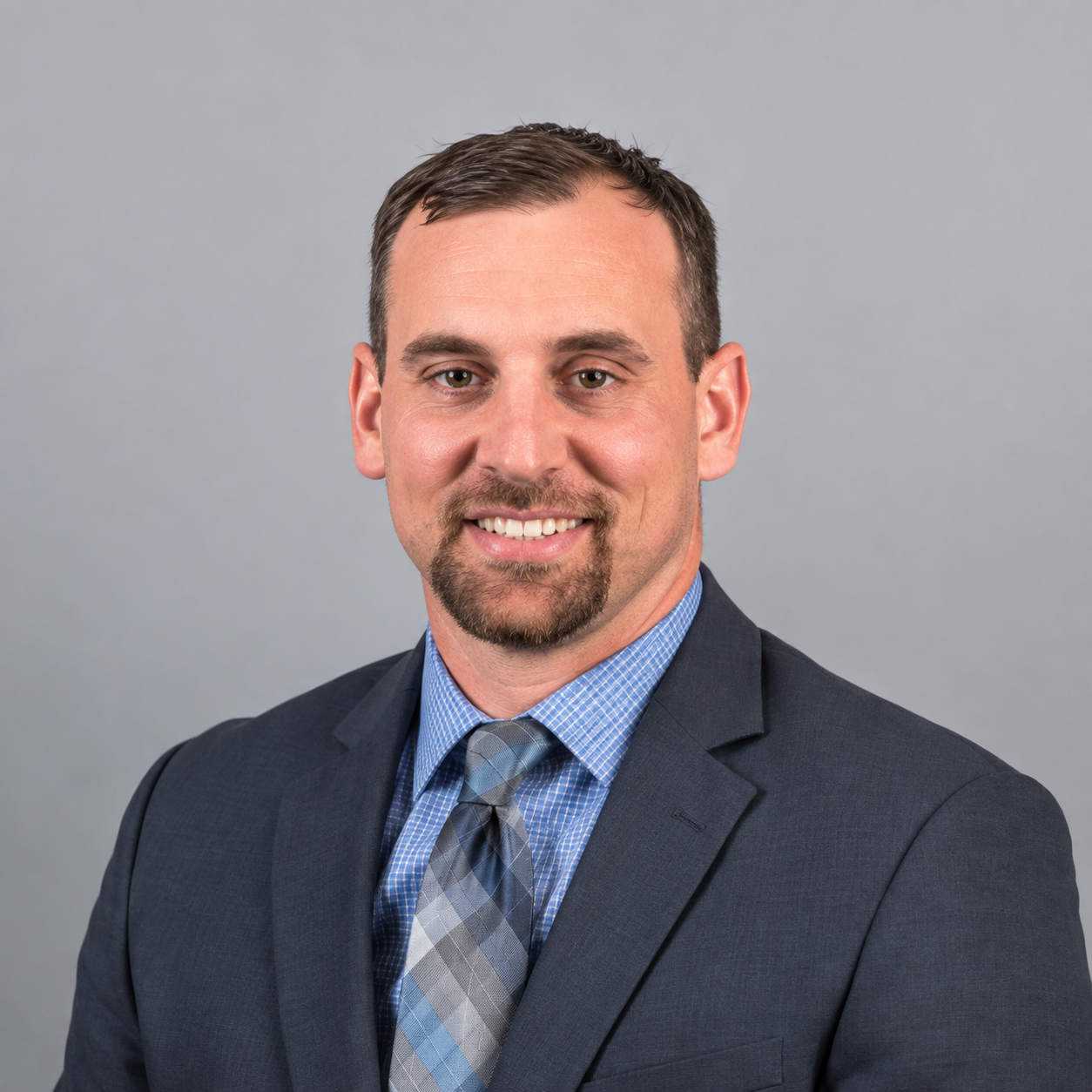
Andrew Baumgardner is the CEO of The Baumgardner Group, a family of companies based in Egg Harbor Township, New Jersey, that spans glazing, flooring, masonry and concrete, commercial real estate, and waste services. Andrew joined the family business in 2013 and serves on the Board of Trustees of the Associated Construction Contractors of New Jersey (ACCNJ).

James Baumgardner is the CFO of The Baumgardner Group and oversees finance and administration across the group’s companies. He’s a CPA who started his career in tax at Deloitte, then joined the family business in early 2020. His team runs the company’s job-cost tracking and financial reporting.
